Cart
0
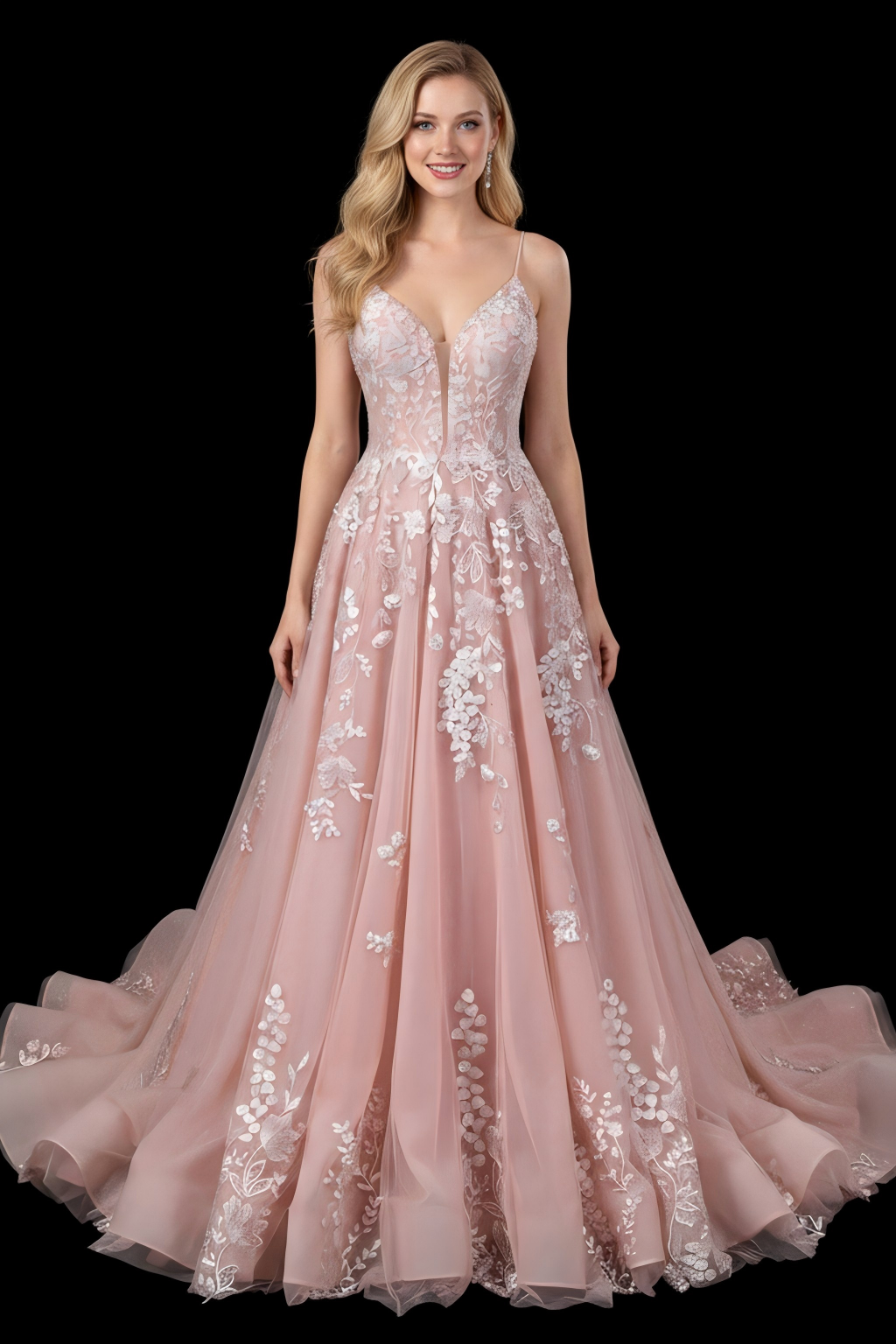
 A-line, with the hyphen, is the correct spelling for the wedding dress silhouette fitted at the waist and flared toward the hem, shaped like a capital letter A. "Aline" without the hyphen is a common misspelling, but here's the thing: it doesn't matter which one you typed to land here. You're in the right place either way.
If you searched "aline wedding dresses" tonight, at 11 p.m., three tabs deep into a Pinterest spiral, congratulations. You've stumbled into one of the internet's quietest little grammar fights. And you're about to get more out of it than you expected.
Is It "Aline" or "A-Line"? Which Spelling Is Correct?
"A-line" is correct. The hyphen connects two words acting as a single descriptive term, a compound modifier, the same way you'd write "well-known" or "long-term." Drop the hyphen, and technically, you've created a new word that doesn't officially exist in fashion terminology, though everyone from Google to your future mother-in-law will still know what you meant.
"Aline" happens to also be a real first name, French, elegant, popular in the 1800s. So when you type it into a search bar, you're accidentally asking about a name and a neckline at the same time. Google has gotten remarkably good at figuring out which one you actually want. It reads the surrounding words, "wedding," "dresses," "bridal," and quietly corrects course behind the scenes.
That's not luck. That's semantic search doing its job.
Why Google Cares About a Missing Hyphen
Short answer: it doesn't, not really, not anymore. Older search engines used to be brutally literal. Type the wrong word, get the wrong results, tough luck. Modern search works differently. It's built to understand intent, not just characters on a screen.
Here's what's actually happening when you type "aline dress" instead of "a-line dress":
● Google's algorithm recognizes the term as a common misspelling of an established fashion word.
● It cross-references the surrounding context (wedding, bridal, bridesmaid) to confirm intent.
● It serves results for the correct term, "A-line," even though you never typed the hyphen.
This is the same technology that lets you search "resturant near me" and still find dinner. Spelling mistakes used to be a dead end online. Now they're barely a speed bump. Which, honestly, is good news for anyone shopping for a dress at midnight with autocorrect fighting them the whole way.
What Is an A-Line Wedding Dress?
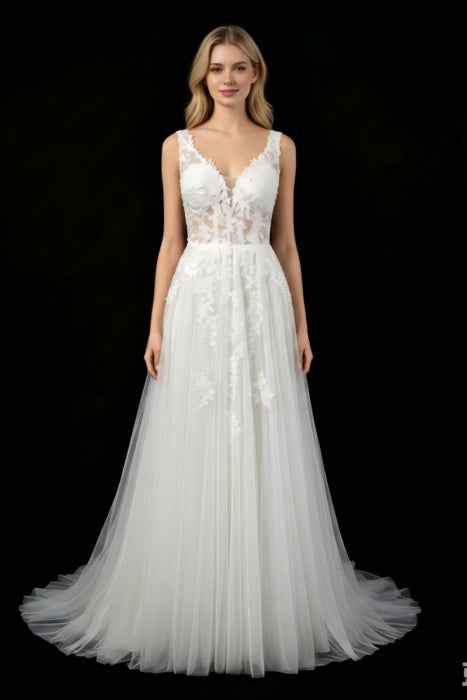
An A-line wedding dress is fitted through the bodice and waist, then flares gradually outward to the hem, creating a silhouette shaped like the letter A. There's no dramatic poof at the hip like a ball gown, and no cling through the thigh like a mermaid cut. It sits right in the middle, structured up top, relaxed and flowing below the waist.
The construction usually involves a fitted bodice, a waist seam (natural, dropped, or occasionally empire), and panels of fabric, often four to eight, stitched together at an angle that widens as they fall. That angled seaming is what creates the flare without needing layers of stiff crinoline underneath. It's a shape you can build in soft fabrics like chiffon or crepe just as easily as in structured satin.
The style isn't new. Christian Dior popularized the "A-Line" as an actual named silhouette in his 1955 spring collection, describing dresses that traced the shape of the letter for the first time as a formal design category. Bridal fashion adopted the term not long after, and it's stuck around for seventy years because it solves a very specific problem: it flatters an enormous range of body shapes without needing custom tailoring tricks.
"After fitting thousands of brides, we see the same moment over and over," says the styling team at OneWedDress. "Someone walks in overwhelmed by silhouette names, tries on an A-line almost as an afterthought, and it's the one that makes them go quiet in the mirror."
Part of why that happens comes down to physics, not just fashion. A ball gown skirt needs layers of crinoline or horsehair braid underneath to hold its shape, that's weight, and weight shows up as drag and heat by hour six of a wedding day. An A-line skirt gets its shape from the seaming itself, the angled panels doing the structural work that stiff underlayers do in other silhouettes. That means an A-line dress can look full and formal without actually being heavy, which matters more than most brides expect once they've been standing, dancing, and hugging relatives for eight straight hours.
There's also a reason bridal shops default to A-line as the "safe first try" during fittings. It's the silhouette least likely to fight against a body a stylist hasn't measured yet. Ball gowns need a fairly precise waist measurement to sit right. Mermaid cuts depend on the hip-to-knee ratio cooperating. A-line has more built-in forgiveness, which is exactly why it's often the first dress pulled off the rack, sight unseen, before anyone's even started narrowing down preferences.
Who Does an A-Line Dress Flatter?
Almost everyone, that's the honest answer, and it's also the reason this silhouette has outlasted most fashion trends. Because the skirt flares from the natural or slightly dropped waist rather than clinging to the hips, it skims over areas brides are often self-conscious about instead of emphasizing them.
A few specific examples, since general reassurance only goes so far:
● Pear-shaped brides get balance, the flared skirt softens hip width while the fitted bodice keeps the upper body defined.
● Apple-shaped brides get a defined waistline created by the seam itself, even without a naturally narrow waist.
● Rectangle or straight-shaped brides get curves added by the silhouette's structure, since the flare creates the illusion of a waist-hip contrast.
● Hourglass-shaped brides get a shape that simply follows what's already there, without adding bulk or hiding the waist.
● Petite brides generally do better with a shorter flare and lighter fabric; heavy tulle can overwhelm a smaller frame, while crepe or chiffon A-line cuts keep proportions balanced.
● Taller brides can handle a fuller, longer flare, including dramatic floor-sweeping trains, without the dress wearing them.
None of this is about "hiding" a body type. It's about proportion. A well-cut A-line does the same job a good blazer does on a work outfit; it directs the eye, creates structure, and lets the person wearing it feel like the point, not the dress.
A-Line vs. Ball Gown vs. Mermaid vs. Sheath
Silhouette names get thrown around like everyone's supposed to just know them. Here's the actual breakdown, side by side:
|
Silhouette |
Fit at Waist |
Skirt Shape |
Best For |
Fabric Weight |
|
A-Line |
Fitted |
Gradual flare from waist to hem |
Nearly all body types |
Light to medium |
|
Ball Gown |
Fitted |
Dramatic, full flare from the waist |
Formal, traditional venues add volume |
Heavy (tulle, taffeta) |
|
Mermaid |
Fitted through the hip |
Flares sharply below the knee |
Hourglass shapes; formal, dramatic entrances |
Structured, stretch fabrics |
|
Sheath |
Close-fitting throughout |
Follows body line, no flare |
Slim builds; minimalist, modern venues |
Light, fluid fabrics |
The quickest way to think about it: A-line is the middle ground. Ball gowns go big. Mermaids go tight, then dramatic. Sheaths go straight through. A-line splits the difference — structured where it needs to be, relaxed where it matters, and forgiving in a way the other three shapes just aren't built to be.
Styling and Pairing Tips for A-Line Dresses
Picking the silhouette is step one. Making it work for your actual wedding day is step two, and it comes down to fabric, neckline, and a few practical details people forget until it's too late.
Fabric changes everything. A tulle A-line reads as classic and a little romantic, think garden wedding, outdoor ceremony, natural light. A crepe or satin A-line reads sleeker and more modern, better suited to an evening reception or an indoor venue with a formal dress code.
Neckline pairs with face and bodice shape. A sweetheart neckline softens the transition into the fitted bodice. A V-neck elongates the torso, which works well for shorter brides. Off-the-shoulder necklines add width up top, balancing a fuller A-line skirt below.
Consider the venue floor. A long, dramatic A-line train looks incredible in a church aisle. It becomes a hazard on grass, sand, or gravel. If you're getting married outdoors, ask about a detachable train or a shorter hemline option before you fall in love with a photo online.
Layer accessories intentionally. A-line dresses have enough visual interest built into the seams that they rarely need heavy embellishment on top. A single statement piece, a belt at the natural waist, a simple veil, and one bold earring choice usually reads better than stacking multiple accent pieces.
Undergarments matter more than people expect. Because A-line skirts rely on structured panels rather than crinoline, the wrong slip can flatten the flare or add unwanted bulk. Ask your stylist what's built into the dress before buying separate shapewear.
Sleeves change the whole proportion. Long lace sleeves visually lengthen the arm and draw attention upward, which works well if you want the eye to travel from bodice to face rather than settling on the skirt. Sleeveless and cap-sleeve options keep the shoulders open and tend to photograph better in bright outdoor light, since there's less fabric catching shadows.
Season affects fabric choice more than most brides plan for. A satin or Mikado A-line holds heat, which is lovely for a winter ceremony and rough going in July. Chiffon and georgette breathe better and move more in the air, which matters if you're getting married somewhere the forecast is working against you. If you're unsure, ask for fabric swatches before ordering, a photo on a screen won't tell you how a fabric feels at 85 degrees.
If you're still narrowing things down, OneWedDress's size and fit guide walks through measurements specific to A-line cuts, and it's worth checking before you order rather than after.
Ready to Actually Shop the Silhouette?
You came here to settle a spelling argument, and now you know more about garment construction than most people who've been married twice. That's a fair trade.
If the A-line sounds like your shape, OneWedDress carries a full range of A-line wedding dresses, from lightweight chiffon styles built for outdoor ceremonies to structured satin cuts for formal venues, in sizes that go well beyond what most bridal boutiques stock. Every dress ships worldwide, comes with a detailed size guide, and includes customer support if you need help before you commit.
No pressure to buy today. Just browse, save a few, and come back when you're ready.
Ready to take the next step? Explore the full A-line collection at OneWedDress and find the silhouette that feels like yours.
Frequently Asked Questions
Is "A-line" one word or two?
Neither, technically, is it a hyphenated compound. Write it as "A-line," with a capital A and a hyphen connecting it to "line." It functions as a single descriptive term, similar to "long-term" or "well-known."
Why do so many people search "Aline" without the hyphen?
Autocorrect often strips hyphens from search bars, and "Aline" is also a common first name, which makes the misspelling especially frequent. Google recognizes the pattern and adjusts results based on surrounding context like "dress" or "bridal."
What makes a dress "A-line" instead of just full or flowy?
The defining feature is the fitted waist seam combined with a gradual, consistent flare to the hem. Full or flowy dresses without a defined waist seam are usually classified differently, such as empire-waist or trapeze silhouettes.
Does an A-line dress work for a beach or outdoor wedding?
Yes, particularly in lightweight fabrics like chiffon or crepe with a shorter or detachable train. Heavier tulle A-line styles are better suited to indoor or formal venues where the skirt doesn't need to move through sand or grass.
Can petite brides wear a full-length A-line gown?
Absolutely, with a few adjustments. A shorter flare point, lighter fabric, and a hem tailored precisely to height all help keep proportions balanced so the dress doesn't overwhelm a smaller frame.
Is A-line more affordable than a ball gown?
Generally, yes. A-line dresses typically use less fabric and less structural boning than ball gowns, which often translates to a lower price point without sacrificing the formal look many brides want.
Do A-line dresses work for pregnant or postpartum brides?
Yes, and the natural or slightly dropped waist seam is part of why. It sits comfortably without pressing on the midsection the way a fitted mermaid or sheath cut can, and the flare below the waist accommodates a changing shape without needing a separate custom order.
Can I wear an A-line dress for a second wedding or vow renewal?
There's no rule against it, and plenty of brides do. The silhouette reads as classic rather than trend-driven, which is part of why it doesn't feel tied to a specific "first wedding" moment the way some bolder cuts can.