Cart
0
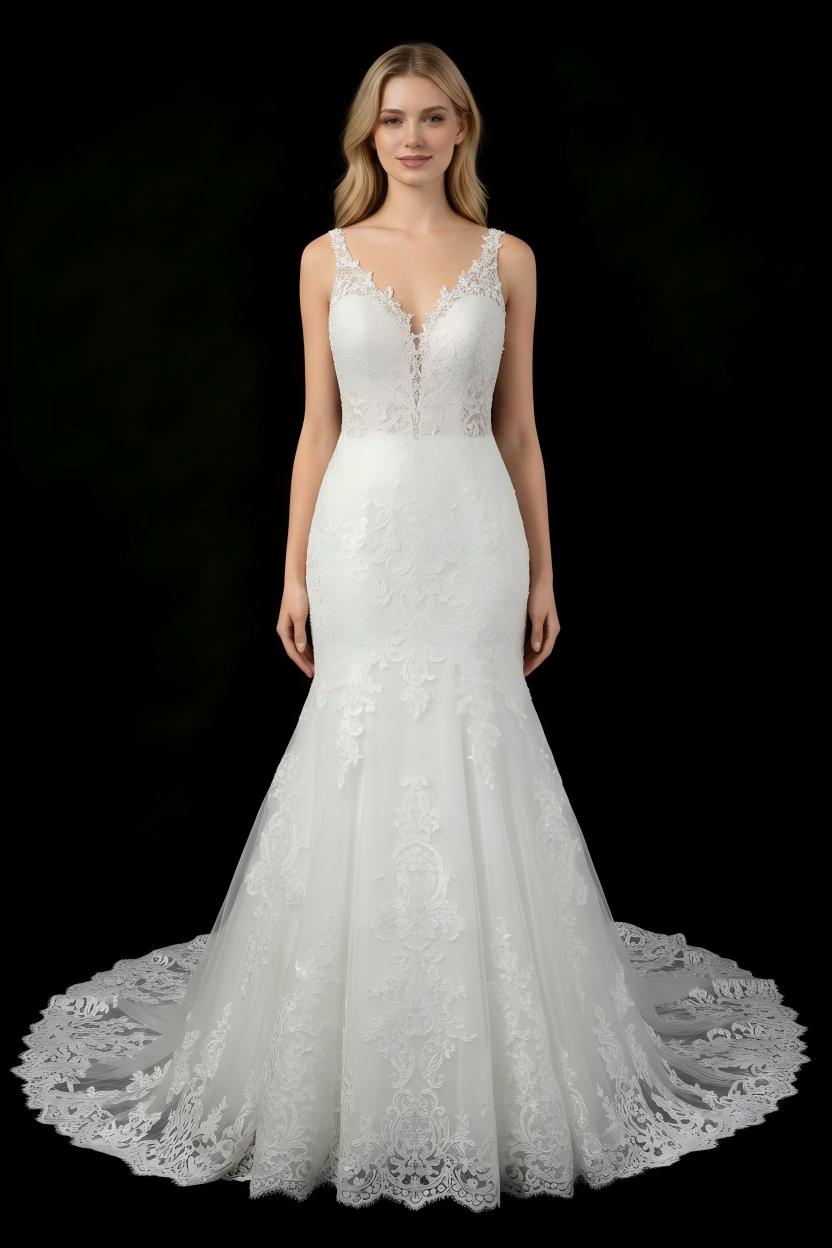
 You've narrowed it down to three shapes, and now you're stuck. Trumpet, mermaid, ball gown, the names sound almost interchangeable until you're standing in a fitting room wondering why one dress lets you sit down comfortably and another one doesn't.
Here's the short version. A trumpet dress fits close through the hip and flares gradually below the knee. A mermaid dress hugs the leg all the way to the knee, then flares sharply for a dramatic fishtail. A ball gown fits at the waist and drops into a full skirt from there, no hip-hugging involved at all.
That one sentence solves half the confusion. The rest of this guide handles the part that actually matters: which one fits your body, your venue, and your wedding night plans.
What's the Difference Between Trumpet, Mermaid, and Ball Gown Silhouettes?
The difference comes down to two things: where the fabric starts flaring away from your body, and how sharply it does it.
● Trumpet: skims the body through the hip and thigh, then flares out gradually starting below the knee. Think of a tulip opening slowly.
● Mermaid: fits tightly through the hip, thigh, and knee, then flares suddenly right at or just above the knee. The flare is sharper and the fitted portion runs longer down the leg.
● Ball gown: fits at the natural or dropped waist, then the skirt falls in a full, often layered shape all the way to the floor. No hip-hugging at all, the structure comes from crinoline, tulle, or boning in the bodice, not from following your leg line.
Here's the side-by-side so you don't have to scroll back later:
|
Feature |
Trumpet |
Mermaid |
Ball Gown |
|
Flare point |
Below the knee |
At or just above the knee |
Waist |
|
Silhouette drama |
Moderate |
High |
High (volume, not fit) |
|
Best body type |
Hourglass, straight |
Hourglass, curvy |
Nearly all body types |
|
Mobility/dancing |
Moderate |
Limited |
Easy |
|
Formality level |
Semi-formal to formal |
Formal, glamorous |
Traditional, formal |
|
Best venue |
Indoor, ballroom |
Ballroom, evening reception |
Church, ballroom, castle |
I've fitted brides into all three, and the question that trips people up isn't "which looks best in photos." It's "which one can I actually live in for twelve hours." Keep that in mind as we go section by section.
Ready to see these silhouettes on real dresses? Browse our collection of trumpet, mermaid, and ball gown styles side by side.
Trumpet Wedding Dress: Fit, Flare, and Who It's For
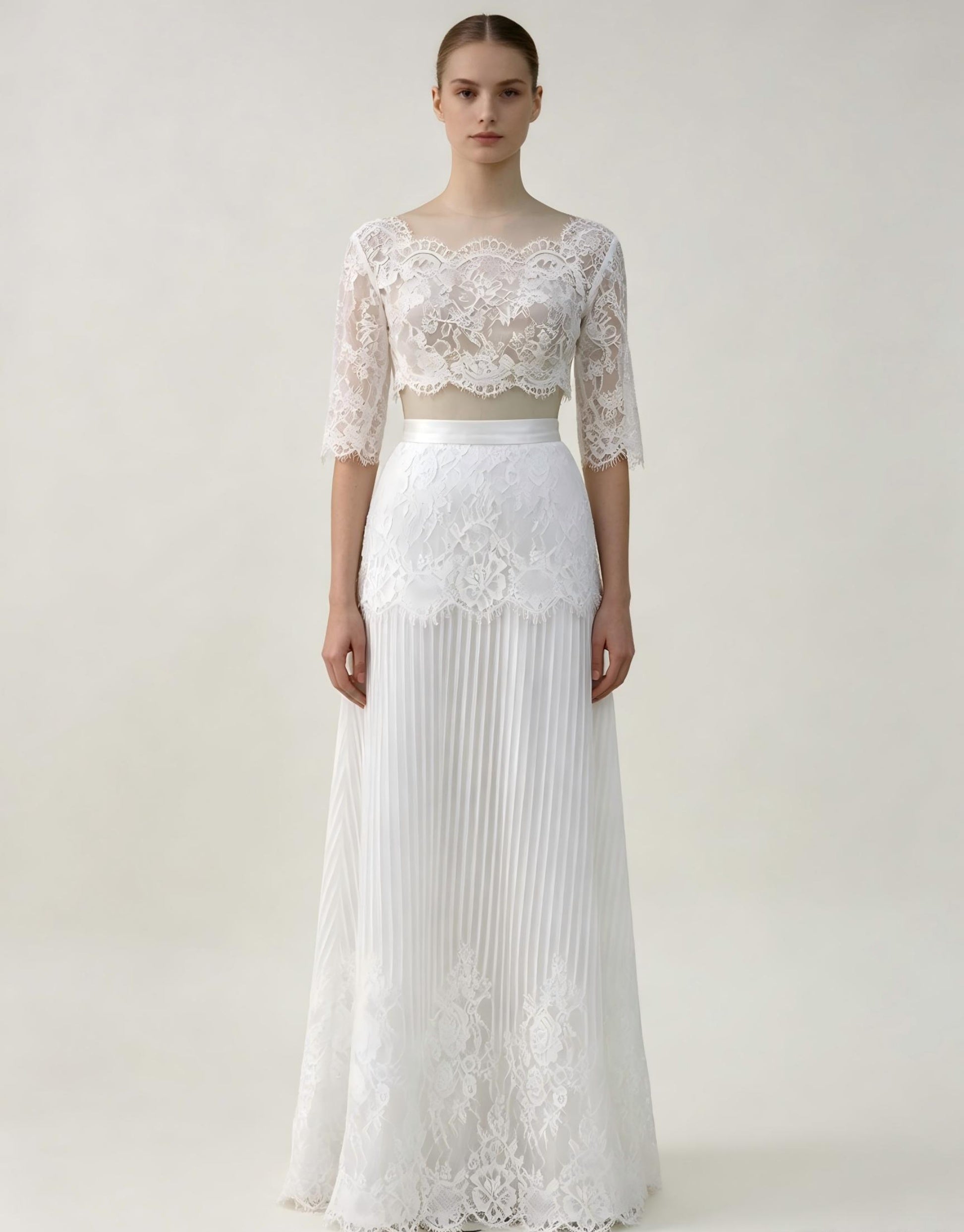
A trumpet silhouette wedding dress sits close to the body from the shoulder down through the hip, then releases into a flare that starts below the knee. The flare point is the whole story here, it's lower and looser than a mermaid, which is why a trumpet gown gives you shape without locking your knees together.
Designers usually build this flare with godets, triangular fabric panels sewn in below the knee that add volume without adding bulk at the hip. That construction detail is why a trumpet gown can look dramatic from a distance but still let you take a full stride up close.
Best Body Types for Trumpet Gowns
Trumpet works especially well if you have:
● An hourglass figure: The close fit celebrates a defined waist without over-emphasizing it
● A straight or athletic build: The flare below the knee adds curve where a straight body might want it
● A long torso: The lower flare point elongates the leg line rather than cutting it off early
If you're petite, ask about a raised flare point during alterations. Moving it a few inches higher can keep the proportions from swallowing a shorter frame.
Comfort and Mobility
This is where I'll be honest with you instead of just selling you a dress. Trumpet gowns sit in the middle of the comfort scale.
● Walking: fine. The lower flare point gives you more leg room than a mermaid.
● Sitting: manageable, but the fitted hip means you'll want a dress with a bit of stretch fabric or a well-placed back zip that isn't rigid.
● Dancing: doable for slower songs; a fast-paced reception might have you feeling the fitted hip by hour three.
Think of it like wearing a great blazer that's tailored close through the shoulders. Looks sharp all night, but you notice it if you're reaching overhead too many times.
Mermaid Wedding Dress Silhouette: Fit, Flare, and Who It's For
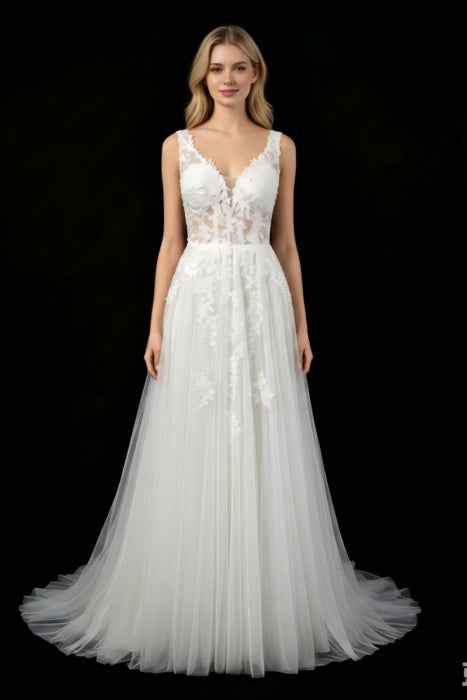
The mermaid wedding dress silhouette is the most fitted of the three. It hugs the body from the bust down through the hip, thigh, and knee, then kicks out into a fishtail flare right at or just above the knee. That's a longer fitted section and a sharper flare than a trumpet, which is exactly why people mix the two up.
If a trumpet is a tulip opening slowly, a mermaid is more like a closed umbrella that snaps open all at once.
Best Body Types for Mermaid Dresses
Mermaid dresses are famous for one reason: they're built for a defined waist-to-hip ratio.
● Hourglass figure: this is the silhouette's best friend. The fitted line follows your natural curve the entire way down.
● Curvy or fuller figures: contrary to a myth I hear constantly in fittings, mermaid isn't off-limits for plus-size brides. A well-constructed mermaid gown with the right boning and lining can be one of the most flattering options for a curvy body, because the structure does the shaping work for you.
● Tall frames: the long fitted line reads especially elegant on height, since there's more leg to showcase before the flare kicks in.
If you're petite or don't have a lot of waist definition, a mermaid can overwhelm your frame. That's not a flaw in your body, it's just physics. A silhouette that's built to follow curves needs curves to follow.
Comfort and Mobility
I won't sugarcoat this one. Mermaid is the least forgiving silhouette for movement.
● Walking: shorter steps than you're used to. Many mermaid gowns need a slit or a walking panel sewn in.
● Sitting: the toughest of the three. Rigid boning through the hip can make a long dinner reception uncomfortable if the dress wasn't fitted with sitting in mind.
● Dancing: limited. This is a portrait-and-first-dance silhouette more than an all-night-on-the-floor silhouette.
Plenty of brides still choose it and love every minute, because the photos are worth it and the reception has a planned outfit change. That's a completely valid strategy, just plan for it rather than get surprised by it at hour six.
Ball Gown Wedding Dress: Fit, Flare, and Who It's For
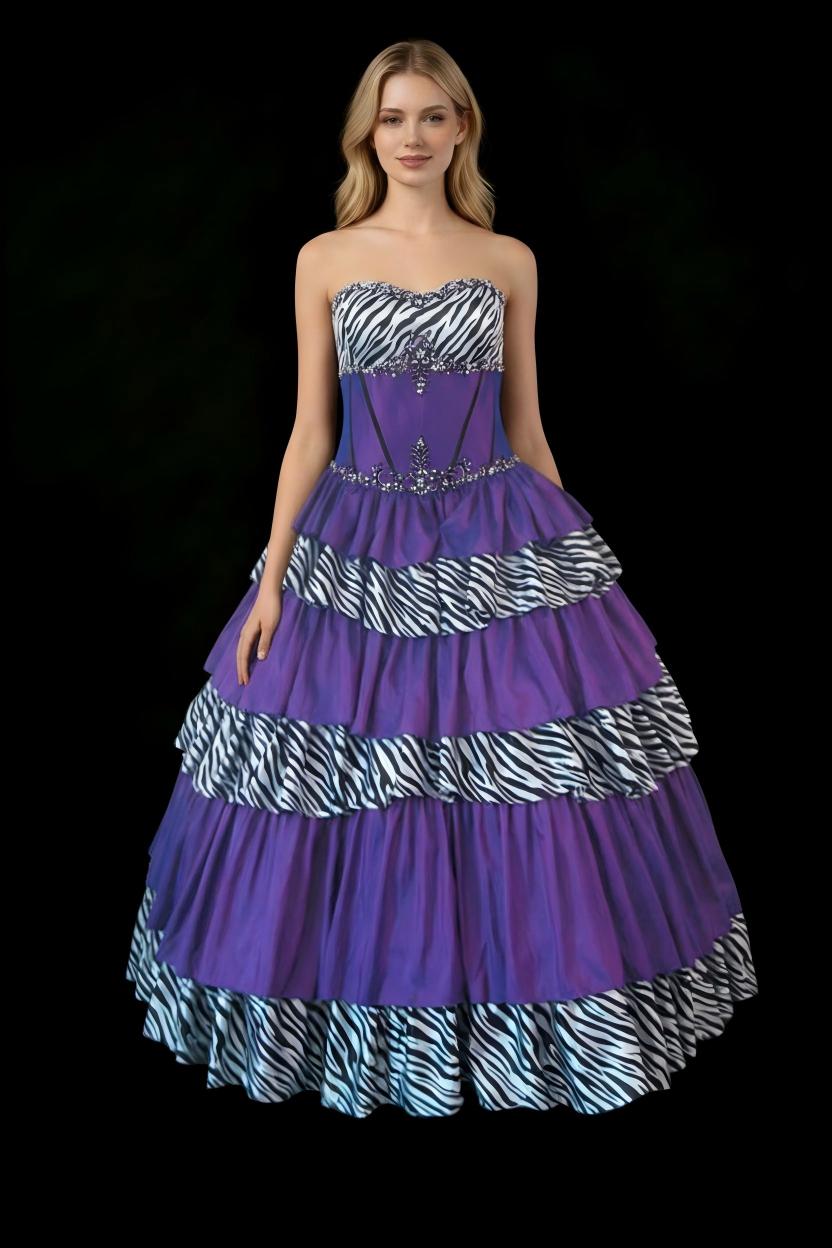
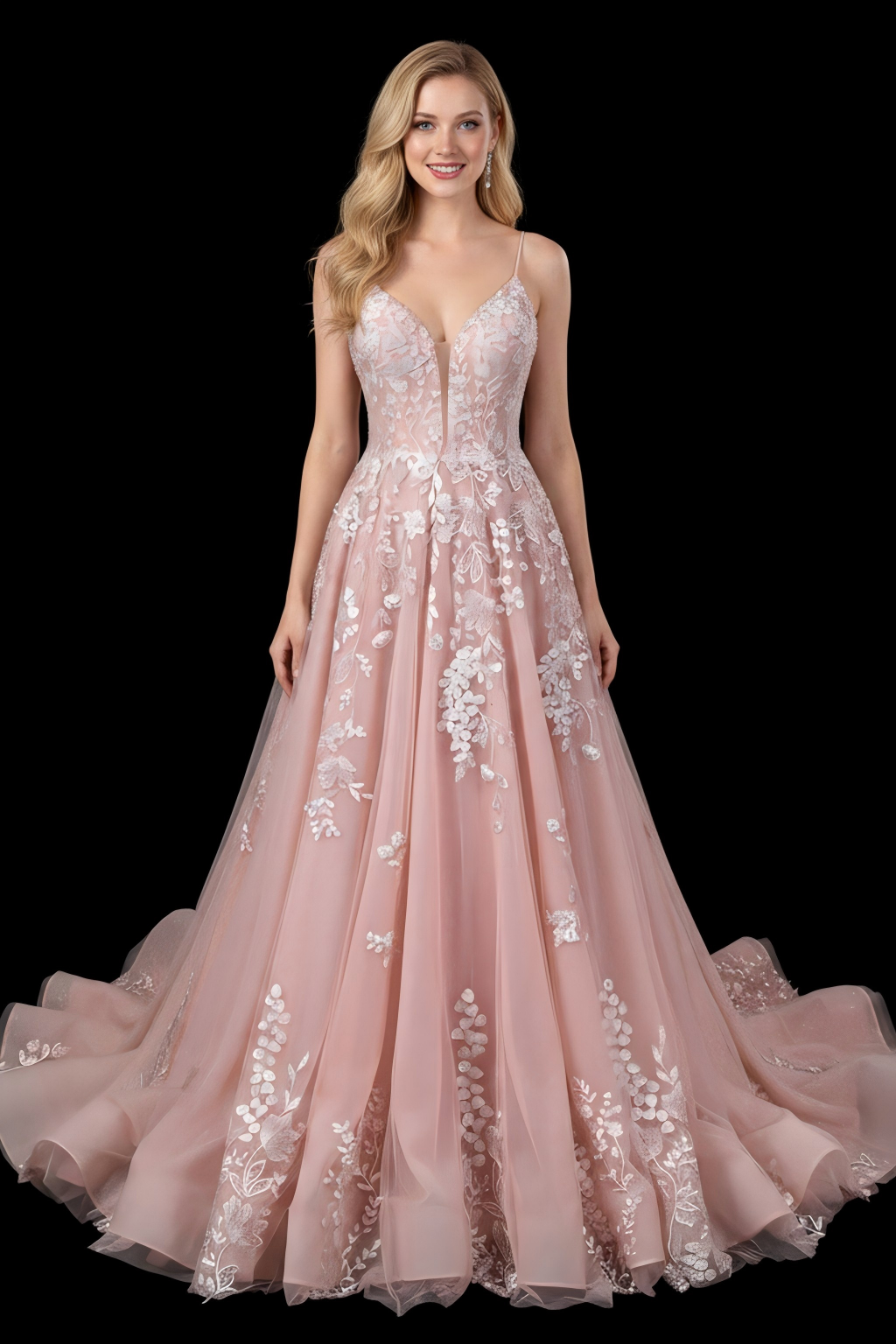
A ball gown wedding dress fits at the waist, then drops straight into a full skirt with no attempt to follow the hip or leg line. All the shaping happens in the bodice; all the drama happens in the skirt.
This is the silhouette people picture when they think "fairy tale wedding," and there's a practical reason for that beyond aesthetics, a full skirt hides a multitude of sins and fits a much wider range of bodies without custom tailoring.
Best Body Types for Ball Gowns
This is genuinely the most universally flattering of the three, and it's not close.
● Pear shapes: the fitted bodice highlights the waist while the skirt balances wider hips.
● Straight or athletic builds: a defined waist appears where the dress creates one, even if your natural waist isn't sharply defined.
● Petite frames: a ball gown with a natural (not dropped) waistline avoids overwhelming a shorter torso.
● Plus-size brides: full skirts distribute volume evenly, which many curvy brides find more comfortable than a fitted bodice all the way down.
Comfort and Mobility
Here's the tradeoff nobody talks about enough: ball gowns are the easiest to move in and the hardest to navigate physically.
● Walking: easy, no restriction at the hip or knee at all.
● Sitting: easy, assuming the skirt has enough give (crinoline can be bulky in a booth, but rarely uncomfortable).
● Dancing: the best of the three by far. You can move freely all night.
● The catch: doorways, narrow aisles, car doors, and bathroom stalls become a genuine logistics puzzle. If your venue has tight hallways or a spiral staircase entrance, ask about skirt volume before you fall in love with a gown.
Which Silhouette Is Best for Your Body Type?
If you want the short answer without re-reading three sections, here it is:
1. Hourglass figure → any of the three works, but mermaid and trumpet show off the waist-hip ratio most
2. Pear shape → ball gown or trumpet, both balance wider hips with a defined waist above
3. Straight/athletic build → ball gown for instant curve, or trumpet for a lower-key shaping effect
4. Curvy/plus-size → ball gown for even weight distribution, or a properly structured mermaid for dramatic shaping
5. Petite frame → ball gown with a natural waistline, or trumpet with a raised flare point
6. Tall frame → mermaid to showcase leg line, or trumpet for elegant length without overwhelming drama
Which Silhouette Is Best for Your Venue?
Your venue decides more of this choice than most brides expect going in.
● Ballroom or hotel reception: all three work. Wide-open floor space handles ball gown volume, mermaid drama, and trumpet ease equally well.
● Beach or outdoor wedding: trumpet or a slimmer mermaid. Sand and grass are unforgiving to a full ball gown skirt, and the last thing you want is fabric dragging through wet grass at golden hour.
● Church wedding: ball gown is the traditional pick, largely because the aisle walk and kneeling (if your ceremony includes it) favor a skirt that moves freely.
● Historic venue or castle: ball gown, hands down. The scale of the setting matches the scale of the silhouette.
● Rooftop or small intimate venue: trumpet. It reads elegant without needing the floor space a ball gown demands.
Trumpet vs Mermaid vs Ball Gown — Side-by-Side Comparison
One more look at the full picture, now that you know the reasoning behind each column:
|
Feature |
Trumpet |
Mermaid |
Ball Gown |
|
Fit through hip/knee |
Close, flares below knee |
Close through knee, flares above it |
No hip-hugging at all |
|
Drama level |
Moderate |
High |
High (volume-based) |
|
Comfort for dancing |
Moderate |
Limited |
Best |
|
Comfort for sitting |
Moderate |
Most restrictive |
Easiest |
|
Best for |
Hourglass, straight builds |
Hourglass, curvy builds, tall frames |
Nearly every body type |
|
Best venue |
Indoor, rooftop, smaller spaces |
Ballroom, evening reception |
Church, ballroom, historic venue |
Getting the Fit Right
Reading about silhouettes only gets you halfway there, the rest comes down to how a dress is actually built for your body. That's the part a size chart on a screen can't fully solve, which is why sizing and customization support matters as much as the shape you pick.
At OneWedDress, every silhouette in this guide, trumpet, mermaid, and ball gown, comes in a full size range with customizable options for length, sleeves, and fit, so you're not stuck squeezing into a standard size or paying custom-order prices to get it right. Browse the collections by silhouette, check the size and color guide before you order, and reach out to customer care if you're between sizes or unsure how a flare point will sit on your frame.
The right dress isn't the one that looks best on a hanger. It's the one you forget you're wearing by hour eight of your own wedding.
Frequently Asked Questions
What is the difference between trumpet and mermaid wedding dresses?
A trumpet dress flares gradually starting below the knee, while a mermaid dress fits tightly through the knee and flares sharply right at or just above it. The mermaid has a longer fitted section and a more dramatic, sudden flare.
Which is more comfortable, trumpet or mermaid?
Trumpet is generally more comfortable for walking, sitting, and dancing because the flare point sits lower, giving your legs more room to move. Mermaid restricts stride length more due to its longer fitted section.
Can plus-size brides wear a mermaid dress?
Yes. A well-constructed mermaid gown with proper boning, lining, and support can be one of the most flattering silhouettes for a curvy figure. The key is working with a dress that's built with the right internal structure, not just sized up from a smaller pattern.
Is a ball gown or mermaid dress better for a church wedding?
Ball gown tends to work better for traditional church ceremonies because the full skirt moves easily during a longer aisle walk and any kneeling portions of the ceremony. Mermaid can work too, but it needs a bit more mobility planning.
Which silhouette is best for dancing all night?
Ball gown wins here by a wide margin. The unrestricted skirt lets you move freely for hours. Trumpet is workable for slower dancing, and mermaid is the most limiting of the three for an active dance floor.