Cart
0
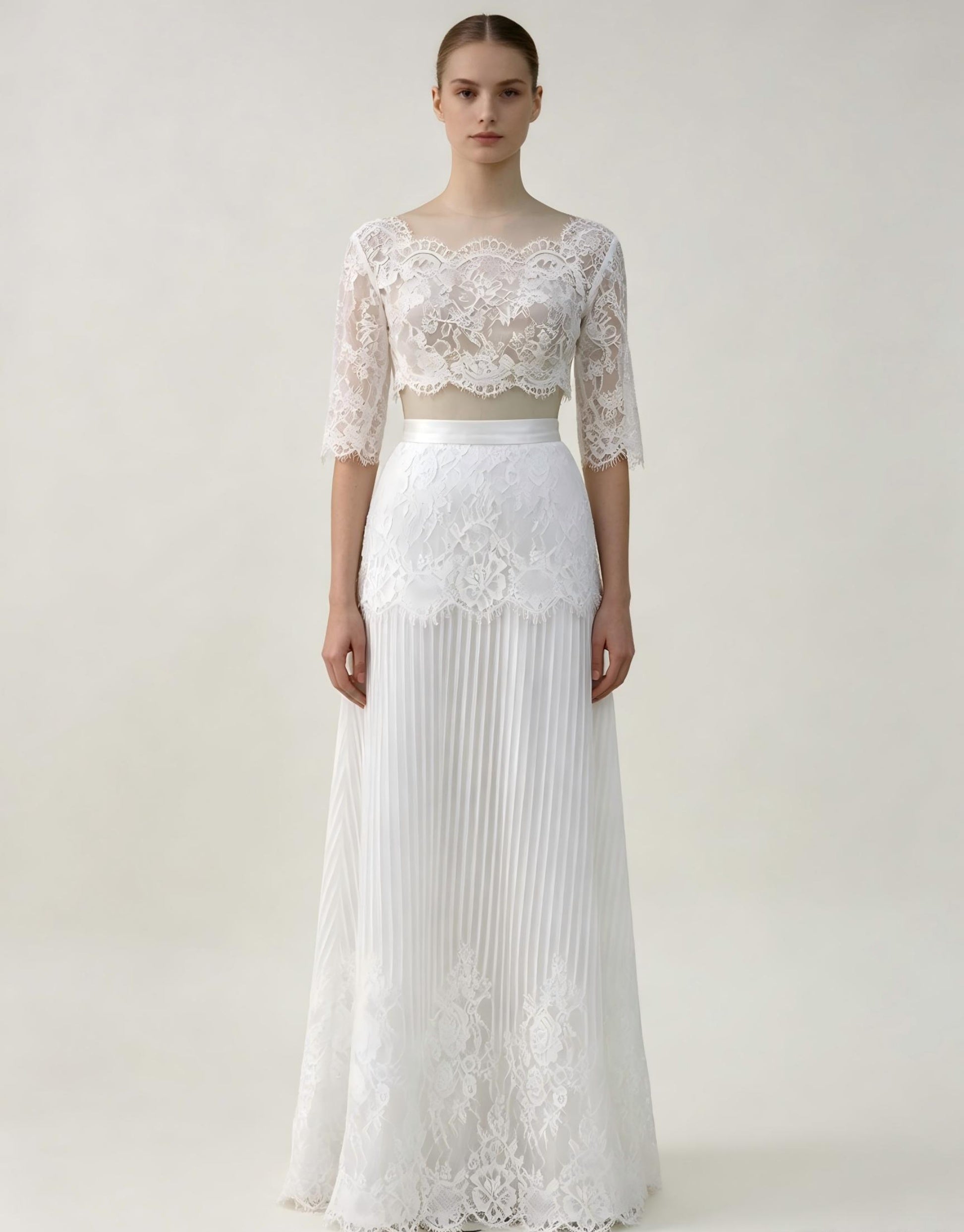
 If you've been scrolling through wedding dress styles and keep bumping into the term "modified A-line wedding dress," here's the short answer: it's a silhouette that starts fitted through the waist and hip like a fit and flare dress, then releases its flare lower down than a classic A-line does. It gives you shape without a heavily structured bodice, and movement without a dramatic skirt. Think of it as the silhouette that refuses to pick a side, and that's exactly why so many brides end up here.
I've watched enough brides try on both a classic A-line and a modified version back to back to know the confusion is real. They look similar in a thumbnail. They feel completely different on your body. Let's fix that.
What Makes a Modified A-Line Different From a Classic A-Line?
A classic A-line wedding dress silhouette flares from the waist seam, creating that clean, uninterrupted triangle shape brides have loved for decades. Simple. Predictable. A little forgiving, but also a little generic on some frames.
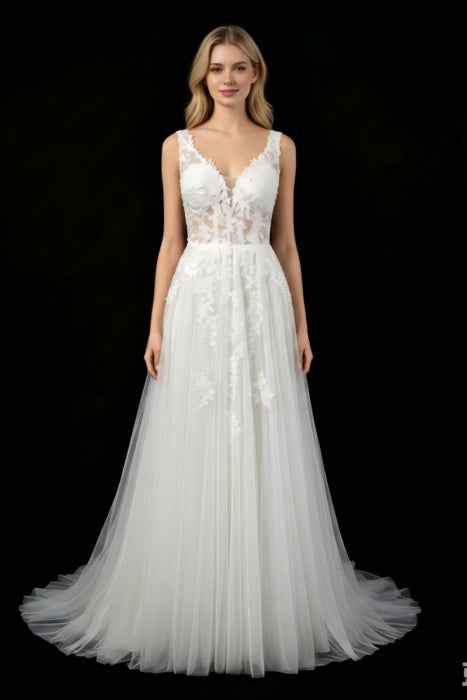
A modified A-line does something else. It skims the hip and upper thigh before the flare kicks in, usually somewhere between the low hip and mid-thigh, depending on the pattern. That extra few inches of closeness changes everything about how the dress reads on your body.
Where the Flare Actually Starts
This is the detail most bridal sites gloss over, and it's the one that actually matters.
● Classic A-line: flare begins right at the natural or slightly dropped waist seam
● Modified A-line: flare begins at the hip or upper thigh, after a fitted panel through the waist and hip
● Result: a modified A-line skims your curves instead of skipping over them, then releases into movement lower down
Pattern-makers achieve this with what's called a flare point or flare drop, the exact spot on the pattern where the seam angles outward. Move that point down a few inches, and you go from "poofy triangle" to "streamlined hourglass with a little swing at the bottom." Some construction also uses godets, which are triangular fabric inserts sewn into the skirt seams to add flare without piling on extra fabric at the waist. It's a small technical choice with a big visual payoff.
Modified A-Line vs. Classic A-Line: Quick Comparison
|
Feature |
Classic A-Line |
Modified A-Line |
|
Flare starts |
At the waist |
At hip or upper thigh |
|
Waist definition |
Soft, less structured |
More defined, closer fit |
|
Movement |
Free-flowing throughout |
Fitted top, flare at bottom |
|
Best for |
Brides wanting maximum ease and coverage |
Brides wanting shape plus movement |
|
Formality |
Classic, traditional |
Slightly more modern, tailored |
Neither one is "better." They're built for different priorities. That's the whole point of knowing the difference.
Modified A-Line vs. Fit and Flare Wedding Dress: Where's the Line?
This is where most brides get genuinely stuck, and honestly, some retailers don't help. They'll use "modified A-line" and "fit and flare wedding dress" almost interchangeably, which isn't quite accurate.
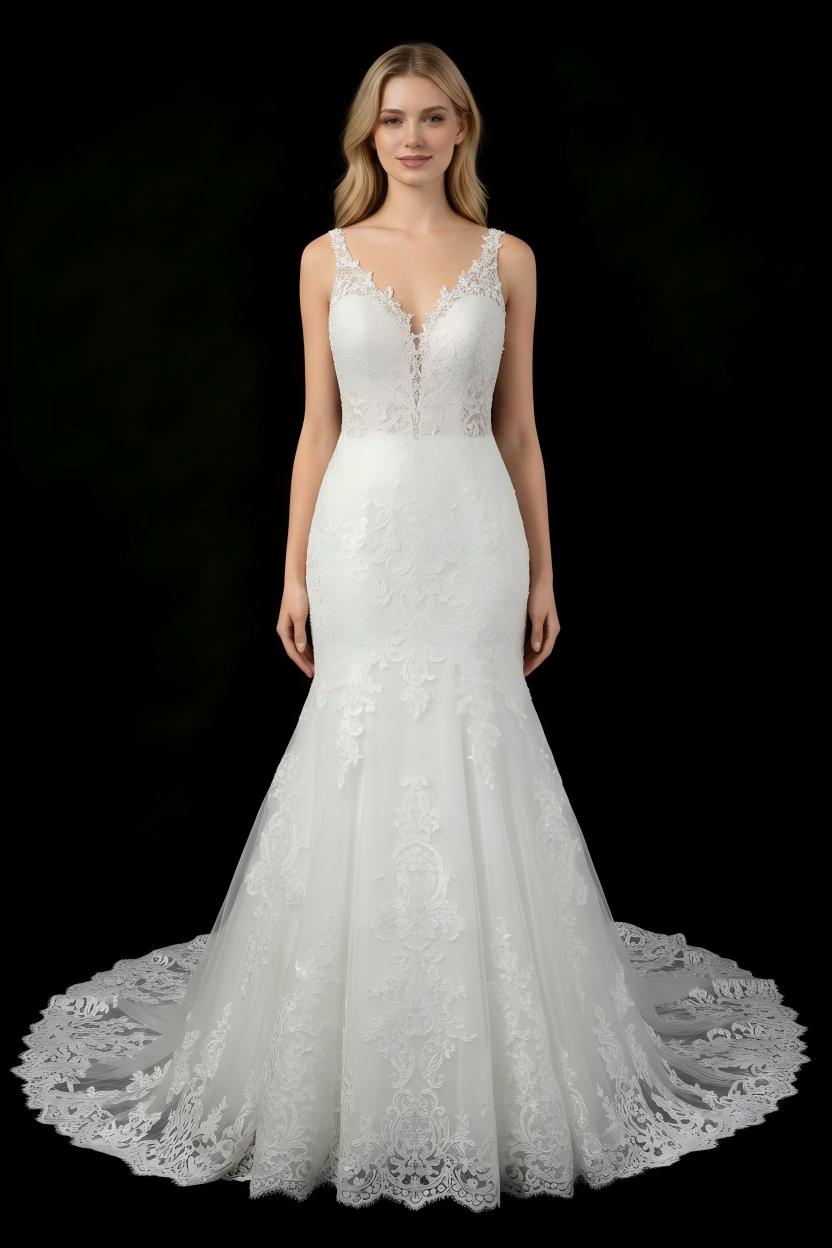
A true fit and flare wedding dress hugs the body all the way from the bust through the hip, often to mid-thigh or even the knee, before it flares out dramatically. It's closer to a mermaid silhouette in spirit, just with a slightly gentler flare.
A modified A-line, by comparison, is looser through the hip. It's fitted, but not clingy. You could also describe it as a semi-fitted wedding gown, a term that captures the middle ground nicely. It's not skin-tight, and it's not billowing. If you've ever tried on a fit and flare and felt like you were being hugged a little too enthusiastically by the fabric, a modified A-line, sometimes described as a wedding dress with subtle flare, is probably the adjustment you're looking for.
Here's a simple gut check:
● If a dress clings past your hip bones and only releases near the knee, that's fit and flare.
● If a dress skims your hip without gripping it and releases before the knee, that's modified A-line.
● If a dress has zero shaping until the waist seam, that's classic A-line.
Who Does a Modified A-Line Flatter Most?
I'm not going to tell you this silhouette is "universally flattering." That phrase gets thrown around so much in bridal marketing it's basically meaningless. Let's talk specifics instead.
Wedding Dress for Hourglass Figure
If your bust and hip measurements are close, with a defined waist between them, a modified A-line is genuinely one of the strongest options on the market. The fitted panel through the hip mirrors your natural shape instead of hiding it, and the flare below adds movement without erasing your waistline. You get definition and drama in the same dress.
Other Body Types: Honest Guidance
● Pear shapes tend to do well too, since the skirt's flare balances a fuller hip without adding volume right where you already have it.
● Apple shapes can absolutely wear this silhouette, but the waist placement matters more here, a slightly dropped waist or an empire-adjacent seam often feels more comfortable than a natural waist seam.
● Straight/rectangle shapes sometimes find a modified A-line reads a bit more fitted than they'd like through the hip, since there's less natural curve for the panel to skim. A classic A-line or a dress with a more structured bodice might create more shape.
● Petite frames should pay close attention to where the flare starts. A flare point too low on a shorter frame can visually shorten the leg line, so a hip-flare (rather than mid-thigh) version usually works better.
None of this is a hard rule. Bodies aren't diagrams. But if you want a starting point rather than guesswork, this is where I'd send you. For a deeper breakdown across every body type, our full wedding dress body type guide goes further than this section can.
Necklines and Details That Pair Well With a Modified A-Line
The bodice does a lot of heavy lifting on this silhouette, since it's the part of the dress your eye lands on first before the skirt takes over. Getting the neckline right isn't just decoration — it changes how the whole dress balances.
● Sweetheart neckline: Echoes the curve of the fitted hip panel below it, creating visual rhythm from top to bottom
● V-neck: Elongates the torso, which pairs especially well if your flare point sits lower on the leg
● Illusion neckline: Adds intricate detail up top without competing with the clean lines of the skirt
● Off-the-shoulder: Widens the shoulder line, which balances a fitted hip nicely on straighter frames
Among all the bridal gown neckline styles out there, these four show up most often on modified A-line gowns for a reason, they don't fight the silhouette's built-in structure. A heavily embellished, wide ball-gown-style neckline can sometimes overwhelm a dress this streamlined. Simpler tends to win here.
How to Tell If a Dress Is a True Modified A-Line (Checklist)
Retailers aren't always consistent with terminology, so here's how to verify it yourself, whether you're shopping online or standing in a fitting room.
1. Check where the seam sits when the dress skims your hip, is it fitted at the hip bone or already flaring at the waist?
2. Look at the flare point in product photos, hip or upper thigh means modified; waist means classic.
3. Feel the fabric through the hip, does it sit close to the body, or is there already room built in?
4. Ask about construction, princess seams or godets in the skirt panel usually signal a modified cut.
5. Compare the hem width to a classic A-line in the same collection, a modified version is typically narrower at the base.
If a dress checks most of these boxes, you're looking at a genuine modified A-line, not just a marketing label.
Comfort, Movement, and Practical Considerations
Nobody talks about this enough, and it matters more than fabric choice or beading on your actual wedding day.
A modified A-line tends to sit comfortably for long stretches because the fitted section is smaller than a full fit and flare, there's less fabric gripping your body, and less risk of that "sitting down feels like a workout" problem some heavily structured gowns create. The flare below the hip also gives your legs room to move, which you'll appreciate the second the dance floor opens up.
Sitting for extended periods, like during a long ceremony or a multi-course dinner, is generally easier in this silhouette than in a true fit and flare, since the hip isn't fighting against a rigid fitted panel all the way down. It's not as forgiving as a full ball gown, but it's a solid middle ground if you want shape without spending your reception adjusting your dress every twenty minutes.
Fabric choice changes this equation too, and it's worth thinking about before you fall in love with a photo. A structured mikado or duchess satin holds the flare shape crisply but adds stiffness through the hip panel. A softer crepe or chiffon-lined option moves more easily and packs down smaller for travel, which matters if you're shipping a dress across the country or flying to a destination wedding. Neither is wrong, it just depends on whether you want the dress to hold its shape or move with you more freely. If you're outdoors, or dancing is a priority, ask about weight before you commit to embellishment.
A Quick Real-World Comparison
Picture two brides at the same reception. One's in a classic A-line with a full, voluminous skirt, beautiful for photos, but she's constantly repositioning it to sit at the head table, and it catches under chair legs. The other's in a modified A-line. She sits down without a second thought, the skirt settling naturally around her, and when the music starts, there's enough flare at the bottom to move without tripping over yards of fabric. Same event, same formality, very different night. That's the practical argument for this silhouette in a nutshell, it's not just about how a dress looks standing still under studio lighting.
Modified A-Line at OneWedDress
We carry this silhouette across several collections, and it's consistently one of the styles brides come back to after trying on three or four other shapes first. The fitted-through-the-hip, flare-below construction shows up in a handful of our bridal gowns, and because everything is customizable, you can adjust the flare point, neckline, and fabric to match your body and your event.
If you're not sure where you fall on the body-type spectrum, our size and color guide walks through measurements step by step before you order, and our customer care team can help you compare specific styles if you're torn between two. We also offer plus-size options in this silhouette, since a flattering hip-skimming cut shouldn't be limited to one size range.
The Bottom Line
A modified A-line wedding dress isn't a vague style label, it's a specific structural choice with a flare point set at the hip or thigh instead of the waist. Once you know what to look for, you can spot one in a photo, describe exactly what you want to a stylist, and stop wasting fitting-room time on dresses that don't match your vision.
If this silhouette sounds like the balance you've been after, shape without stiffness, movement without excess, browse our modified A-line collection at OneWedDress, or reach out to our customer care team with your measurements and we'll point you toward the cuts that'll actually work for your body, not just the ones that photograph well.
Frequently Asked Questions
What is a modified A-line wedding dress?
A modified A-line wedding dress is a bridal silhouette that fits closely through the waist and hip, then flares out lower, typically at the hip or upper thigh, rather than flaring immediately from the waist like a classic A-line.
What's the difference between a modified A-line and a classic A-line?
A classic A-line flares starting at the waist seam, creating a soft triangle shape from top to bottom. A modified A-line stays fitted through the hip and only flares below it, giving more shape definition through the midsection.
Is a modified A-line the same as a fit and flare dress?
No. A fit and flare wedding dress clings to the body through the hip and often to the knee before flaring dramatically. A modified A-line is looser through the hip and releases its flare earlier, making it less fitted overall.
Who does a modified A-line silhouette suit best?
Hourglass and pear-shaped brides tend to see the strongest results, since the fitted hip panel mirrors natural curves. Apple shapes and petite frames can wear it too, with some adjustment to waist placement and flare height.
Is a modified A-line flattering for plus-size brides?
Yes. The hip-skimming construction works well across a range of body sizes because it follows the body's natural shape instead of adding structured volume. Customization options let the fit and flare point be adjusted for individual proportions.
What necklines work best with a modified A-line dress?
Sweetheart, V-neck, illusion, and off-the-shoulder necklines tend to complement this silhouette best, since they don't compete visually with the clean lines of the fitted hip and flared skirt.