Cart
0
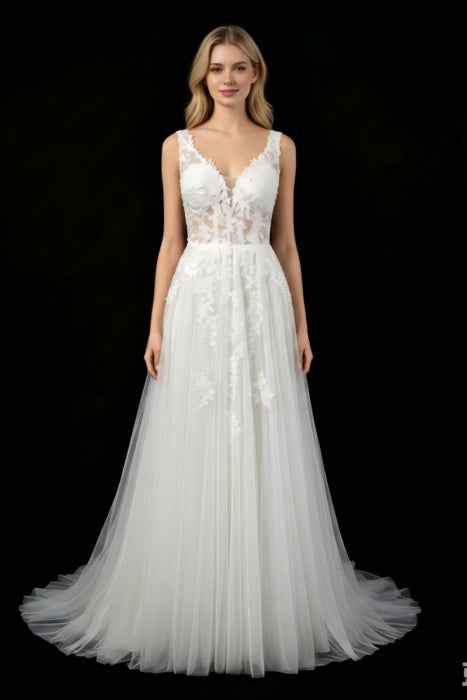
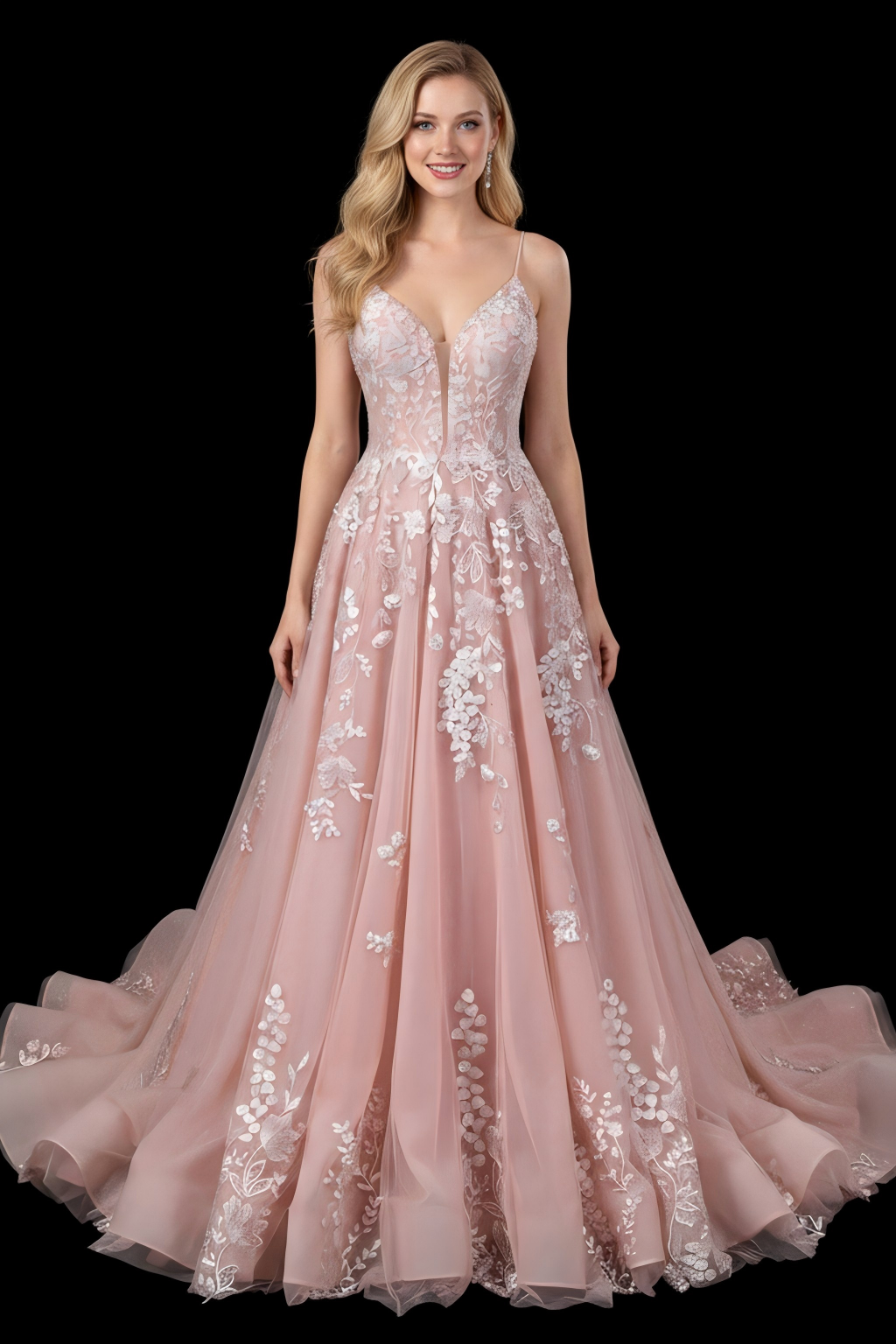
 A tulle A-line wedding dress has a fitted top and a skirt that flares out gently from the waist. The skirt is built from layers of soft netting called tulle. You get volume without the weight. You get drama without the stiffness. That's the whole appeal in one sentence.
I've stood in enough fitting rooms to know a hard truth about tulle. It either looks like a cloud or it looks like a costume. And the difference almost never comes down to the photo you fell in love with online. It comes down to three things: how many layers, what kind of netting, and how the skirt is cut against your body. Let's break all of it down.
What Is Tulle? A Quick Fabric Primer
Tulle is a light, net-like fabric. It's made by knotting fine threads into a hexagonal mesh. Think fishnet, but soft and see-through instead of stretchy.
The name comes from Tulle, a city in France, where this netting was first made in bulk back in the 1800s. Ballet costumes grabbed it fast for tutus. Bridal designers followed not long after, drawn to the same thing dancers wanted: lift, movement, and a skirt that doesn't fight the body underneath it.
A few things set tulle apart from other bridal fabrics:
● It's sheer. One layer alone is see-through. That's why it's always stacked.
● It holds shape without stiffness. No heavy interfacing needed. The mesh weave does the work.
● It's light. A single layer weighs barely anything, so even a full skirt stays lighter than the same volume built in satin.
● It moves beautifully. Tulle catches air and light in a way flat fabrics never will.
None of that is fluff. It's the actual reason brides who want volume but hate feeling boxed into a stiff gown keep landing on tulle.
Why Tulle and the A-Line Silhouette Work So Well Together
An A-line wedding dress fits close through the bodice and hips. Then it flares out gradually toward the hem, forming a shape like the letter A. It's one of the most flattering silhouettes out there because it skims the body instead of clinging to it or exploding out from the waist like a ballgown.
Now pair that shape with tulle. You get a skirt that flares with softness, not stiff structure.
Picture the difference between a paper fan and a silk scarf caught in the wind. A ballgown built in taffeta holds its shape like the fan, rigid, impressive, a little static. An A-line tulle skirt moves like a scarf. It flares, sure. But it breathes while it does it.
That's exactly why tulle A-line dresses show up so often in first-look photos and aisle walks. The skirt carries enough weight to swing with you, and enough lightness to lift on a breeze without looking like an accident.
Types of Tulle Used in Wedding Dresses
Not all tulle behaves the same way. This is where buying regret usually starts. A dress simply listed as "tulle" online could mean four different fabrics.
|
Tulle Type |
Feel & Stiffness |
Best Use |
Relative Cost |
|
Soft (bridal) tulle |
Very soft, drapes close to the body |
Overlays, soft A-line skirts |
Low–Mid |
|
English net tulle |
Fine mesh, slightly crisper |
Structured A-line and ballgown skirts |
Mid |
|
Silk tulle |
Extremely soft, subtle sheen |
Luxury gowns, veils |
High |
|
Synthetic tulle (nylon/polyester) |
Ranges from soft to stiff |
Most ready-to-wear bridal gowns |
Low–Mid |
If a listing doesn't say which type of tulle it uses, ask. It changes everything. Not just how the dress looks in a photo, but how it feels on you at hour six of your reception, when you're finally on the dance floor.
Ready to see the difference for yourself? Browse our collection of tulle A-line wedding dresses and compare layer counts, fabric types, and silhouettes side by side.
How Many Tulle Layers Do You Actually Need?
Nobody explains this part well, so here's a simple way to think about it.
One layer sits close to the body. It softens the edge of an A-line skirt without adding much fullness. Good for a bride who wants texture, not volume.
Three layers are the sweet spot for most A-line dresses. You get visible lift and movement, but no real added weight or bulk at the hips. Most "romantic but not over the top" gowns land right here.
Five layers or more start pushing A-line into ballgown territory. Serious volume, yes. But also more heat, more weight, and a skirt that's harder to manage in a car, a bathroom stall, or a narrow church aisle.
Here's the shorthand I use: one layer is a hint, three layers is a statement, five layers is an event of its own. Match the layer count to how much movement you actually want. Don't just judge it hanging on a rack, tulle always looks flatter on a hanger than it does on a body.
A-Line Tulle vs. Ballgown Tulle vs. Mermaid Tulle: What's the Difference?
Same fabric. Three very different experiences.
1. A-line tulle flares gradually from the waist or hip. Moderate volume. Easiest to walk and sit in. Works across almost every body type and venue.
2. Ballgown tulle flares dramatically from a defined waist seam, often with multiple stiff layers or a structured underskirt. Maximum drama, but heavier and harder to move through doorways or across a dance floor.
3. Mermaid tulle stays fitted through the hip, then flares below the knee, usually as a tulle "flounce" over a fitted lining. Sleek through the body, but it restricts your stride more than the A-line does.
If you've ever watched a bride struggle to sit down at her own reception, odds are good she's in a heavily layered ballgown. A-line tulle tends to solve that problem before it starts.
Is Tulle Comfortable? Breathability, Weight, and Movement
Yes, generally. That's mostly thanks to the open mesh weave, which lets air move through instead of trapping heat the way dense satin or heavy lace can.
Comfort still depends on three things:
● Layer count. More layers mean more warmth and more weight around the legs, even if each layer alone is light.
● Lining quality. Tulle isn't usually worn straight against the skin. There's a lining underneath, and that lining, satin, charmeuse, or a breathable blend, affects comfort more than the tulle itself.
● Where the volume sits. A-line tulle carries its fullness lower on the body, away from the ribs and waist. That means it doesn't restrict your breathing the way a corseted ballgown bodice can.
One thing brides don't expect: tulle can feel a little scratchy against bare skin if the netting is stiff or cheap. If you're sensitive to texture, ask whether the tulle sits directly against your legs or over a soft underlayer.
What We've Learned From Fitting Brides
A few patterns show up again and again once you've fitted enough dresses.
● Static cling shows up most in synthetic tulle with three or more layers, especially in dry, air-conditioned venues. A quick anti-static spray before the ceremony solves it in seconds.
● High necklines pull attention away from tulle volume. If the skirt is doing a lot of visual work, a busy or high neckline competes with it instead of framing it.
● The most common alteration request isn't the hem. It's the waist seam. Brides often need the point where the tulle starts to flare adjusted up or down half an inch to match their actual proportions, not the sample size the dress was cut on.
● Brides almost always underestimate how much a tulle skirt "settles" after the first hour of wear. Layers compress slightly with movement, so a skirt can look fuller in the first fitting than it does by the reception.
None of this is dramatic. It's just the kind of detail you only notice after fitting enough real bodies in real dresses, not mannequins.
A-Line Tulle for Outdoor & Destination Weddings
A-line tulle tends to perform well outdoors. It's light, breathable, and doesn't wrinkle as visibly as heavier fabrics like satin or mikado.
A few practical notes if your ceremony is outside:
● Wind is mostly your friend. Tulle catches the breeze beautifully in photos, and a three-layer A-line skirt handles this far better than a five-layer ballgown, which can act like a sail.
● Grass and dirt happen. Tulle doesn't stain as visibly as satin, but a slightly shorter hem or a bustle option is worth discussing with your tailor.
● Packing for a destination wedding? Tulle bounces back from folding better than most fabrics. It's mesh, so creases relax out with a light steam instead of a full press.
● Heat matters more than people think. If you're marrying somewhere genuinely hot, fewer tulle layers and a breathable lining matter more than almost any other decision about the dress.
Styling an A-Line Tulle Dress: Necklines, Sleeves, and Accessories
Because an A-line tulle skirt already does a lot of visual work, the top half of the dress has more room to play.
Necklines that pair well:
● Sweetheart, classic, softens the shift into a fuller skirt
● Off-shoulder, romantic without competing with the tulle
● Illusion or high neck, more modern, adds contrast
Sleeve options worth a look:
● Puff sleeves for a playful, romantic edge
● Long lace sleeves for coverage and texture against sheer tulle
● Sleeveless for a cleaner, simpler line
Accessories that complement, not compete:
● A simple veil, the skirt already carries plenty of texture
● Delicate, low-profile jewelry, since busy tulle plus busy jewelry looks cluttered fast
● A textured belt or sash at the waist to mark where the A-line begins to flare
The general rule: let tulle be the star of one half of the outfit. If the skirt has real volume, keep the bodice and jewelry simple, and let the fabric carry the moment.
Is A-Line Tulle Right for Every Body Type?
A-line is one of the most versatile silhouettes out there. It skims the body instead of clinging or dramatically flaring, so it tends to flatter a wide range of shapes.
● Petite brides often do better with fewer layers, one to three, so the skirt doesn't overwhelm a smaller frame. Proportion beats volume here.
● Curvy brides frequently find A-line flattering because the flare starts at or below the natural waist, skimming the hip instead of clinging to it.
● Tall brides can usually carry more layers and fuller volume without the dress looking oversized. More height means more room to balance it.
● Straight or athletic body types often use A-line tulle specifically to create the curve and softness a straight silhouette might not have on its own.
If you're not sure where you land, check your measurements against a size guide before ordering. Proportion matters far more than any general body-type rule.
Caring for and Preserving a Tulle Wedding Dress
Tulle is more forgiving than people expect. It's not indestructible, though.
Before the wedding:
● Hang the dress. Don't fold it.
● Steam, instead of ironing, can melt synthetic tulle.
● Keep it away from perfume and hairspray, which can leave marks on the delicate mesh.
After the wedding:
● Get it professionally cleaned within a few weeks. Grass stains and makeup residue set over time.
● Store it flat or hanging in a breathable garment bag, not sealed plastic, which traps moisture.
● Keep it out of direct sunlight for long-term storage. Synthetic tulle can yellow slightly with prolonged UV exposure.
If you're planning to preserve the dress for years, a proper bridal preservation box is worth the money. Tulle holds up well long term, but only when it's stored right from day one.
How Much Does a Tulle A-Line Wedding Dress Cost?
Cost scales mainly with layer count, tulle type, and how much finishing work went into the gown. It's not just brand markup.
Generally:
● Soft synthetic tulle, one to three layers, simple A-line cut, sits at the most accessible price point.
● English net or higher-layer counts cost a bit more, since more fabric and more finishing time go into the skirt.
● Silk tulle or heavy hand detailing, like beading or appliqué, sits at the top of the price range.
More layers mean more fabric and more labor to finish seams cleanly, so the tulle doesn't fray or bunch. That's the honest reason a five-layer skirt costs more than a one-layer one. It's fabric and labor. Nothing sneaky about it.
Explore A-Line Tulle Styles at OneWedDress
If you made it this far, you already know more about tulle than most people shopping for a wedding dress today. That's the whole point. The right dress isn't the one with the most layers or the highest price tag. It's the one where the fabric, cut, and volume actually match how you want to feel walking down the aisle.
Our A-line tulle collection at OneWedDress is built around exactly this thinking, real layer options, honest sizing guidance, and construction that holds up past the first dance. Browse the collection, check the size guide before you order, and reach out to our customer care team if you want a second opinion on layer count or fit. That's what we're here for.
Frequently Asked Questions
What is a tulle A-line wedding dress?
A tulle A-line wedding dress has a fitted bodice and a skirt that flares gradually from the waist, made from layers of sheer netting called tulle. It pairs a flattering, universal silhouette with a light, airy fabric.
Is tulle a good fabric for a wedding dress?
Yes. Tulle is light, breathable, and holds its shape through its mesh weave rather than heavy interfacing, which makes it comfortable for long wear at ceremonies and receptions.
Does tulle wrinkle or crush easily?
It creases from packing or sitting, but bounces back fast with light steaming, since it's a mesh fabric rather than a solid weave. It resists visible wrinkling better than satin or taffeta.
How many layers of tulle does a wedding dress usually have?
Most A-line tulle dresses use one to three layers for moderate volume. Ballgown styles often use five or more for maximum fullness.
Is an A-line tulle dress good for a petite bride?
Yes, especially with fewer layers, one to three, which keep volume proportional to a smaller frame instead of overwhelming it.
Can you wear a tulle A-line dress outdoors?
Yes. Its light, breathable structure suits outdoor ceremonies well, though wind and grass exposure are worth planning around with hem length or a bustle.