Cart
0

Do You Really Need a Petticoat Under Your A-Line Wedding Dress? Not always. Most A-line wedding dresses don't require a petticoat, but plenty of them look noticeably better with one. It comes down to three things: your fabric, how much volume you want, and whether your gown already has built-in structure.
Here's the verdict, no fluff:I've fitted brides in everything from stiff Mikado A-lines to soft crepe slip dresses, and I can tell you the petticoat question trips up almost everyone. Nobody wants to spend money on a layer they don't need. Nobody wants their dress to fall flat in photos either. So let's clear it up, piece by piece.
● Structured fabrics (satin, mikado, taffeta) usually hold their shape fine on their own.
● Soft, flowy fabrics (chiffon, crepe) can look flat or clingy without a boost.
● Want extra fullness or a "bridal" silhouette? A petticoat gets you there fast.
● Going minimalist, boho, or beach-casual? You can probably skip it.
Keep reading, and I'll walk you through exactly how to know which camp you're in.
What Is a Petticoat, Exactly?
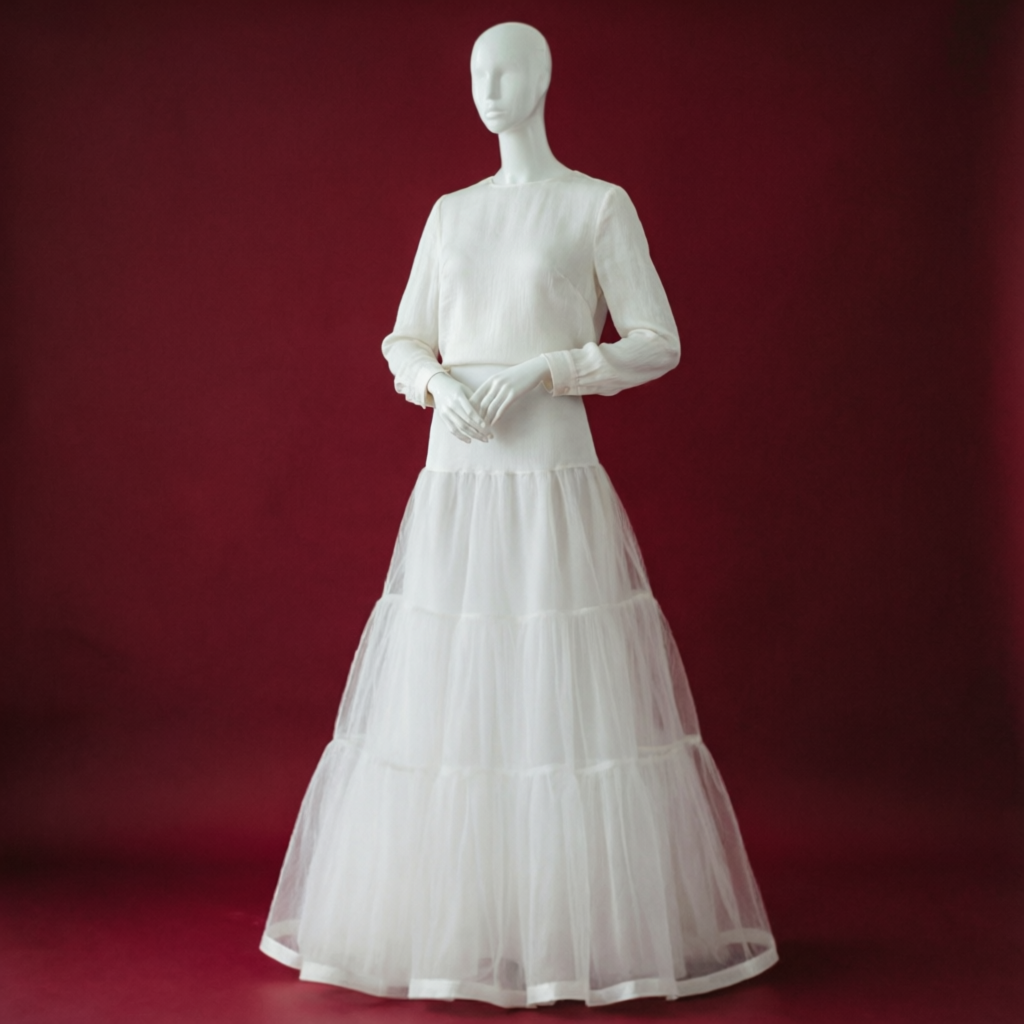
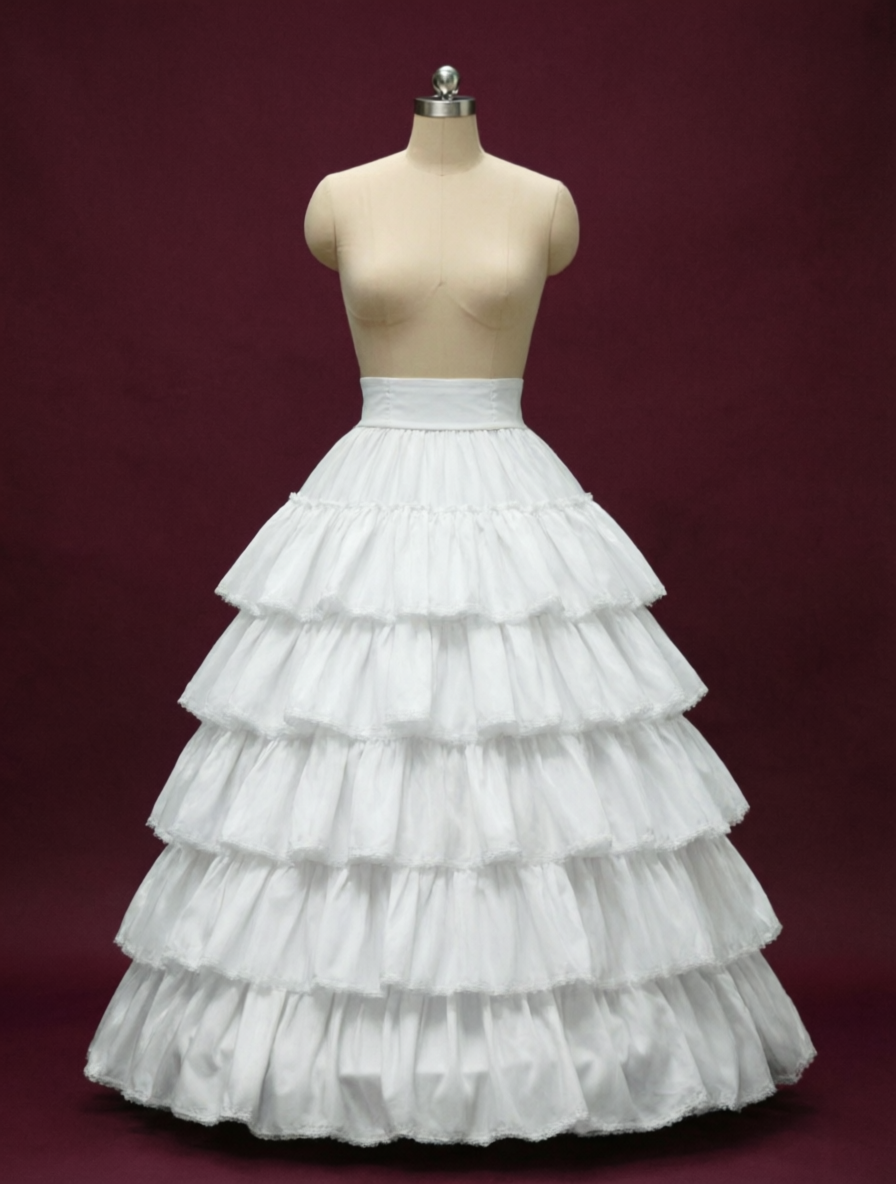
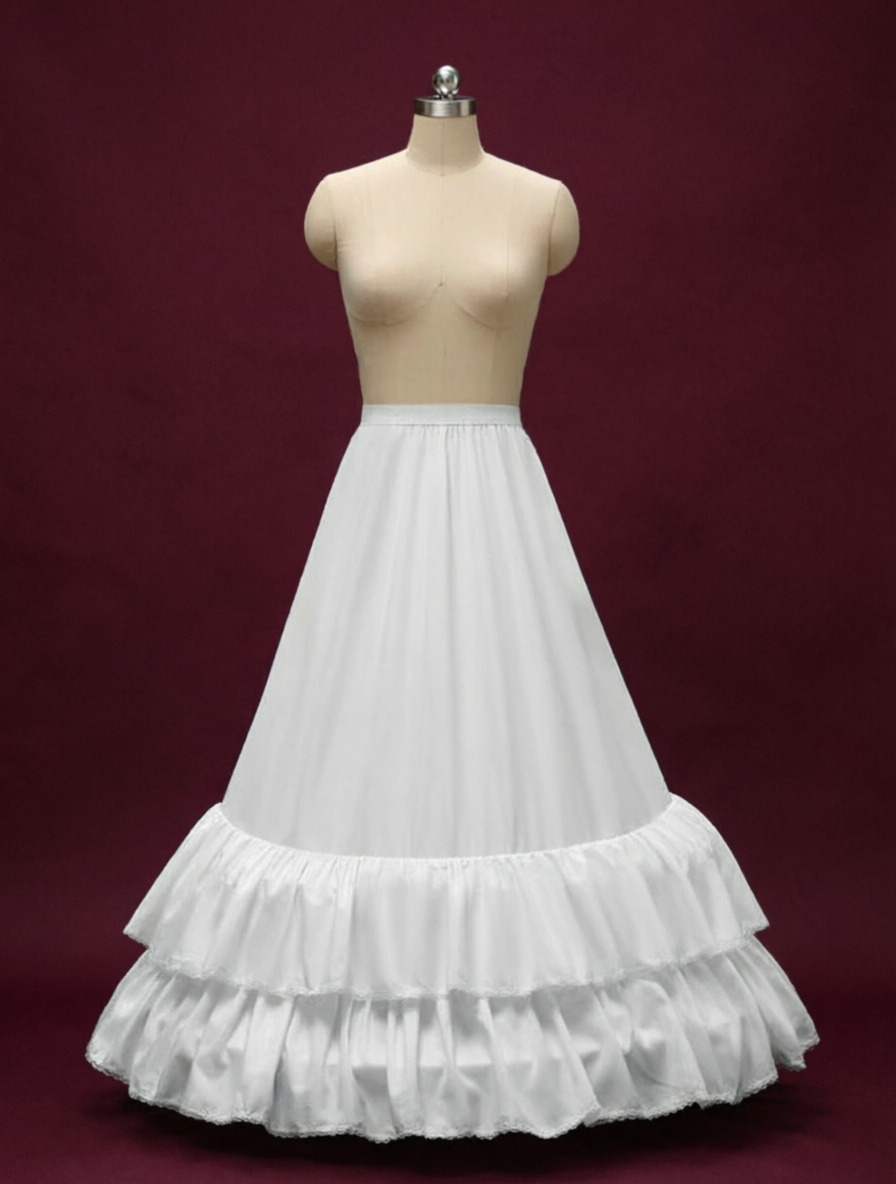
A petticoat is a structured underskirt worn beneath a dress to add volume, shape, or lift to the outer fabric.
That's it. That's the whole job description. It sits between your body and your dress, and it does the heavy lifting your gown's fabric might not be able to do alone.
Petticoat vs. Crinoline vs. Slip vs. Hoop Skirt
People throw these words around like they're interchangeable. They're not, though they're cousins.
● Petticoat: A general term for any structured or semi-structured underskirt that adds shape.
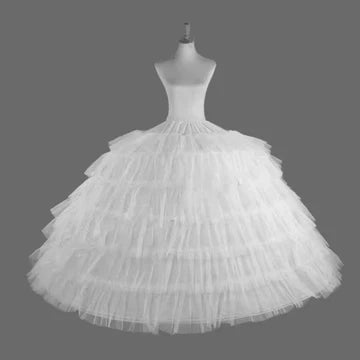
● Crinoline: Technically a stiffer style of petticoat, often layered with tulle or netting for max volume.
● Slip: A soft, unstructured underlayer meant to smooth things out, not add bulk.
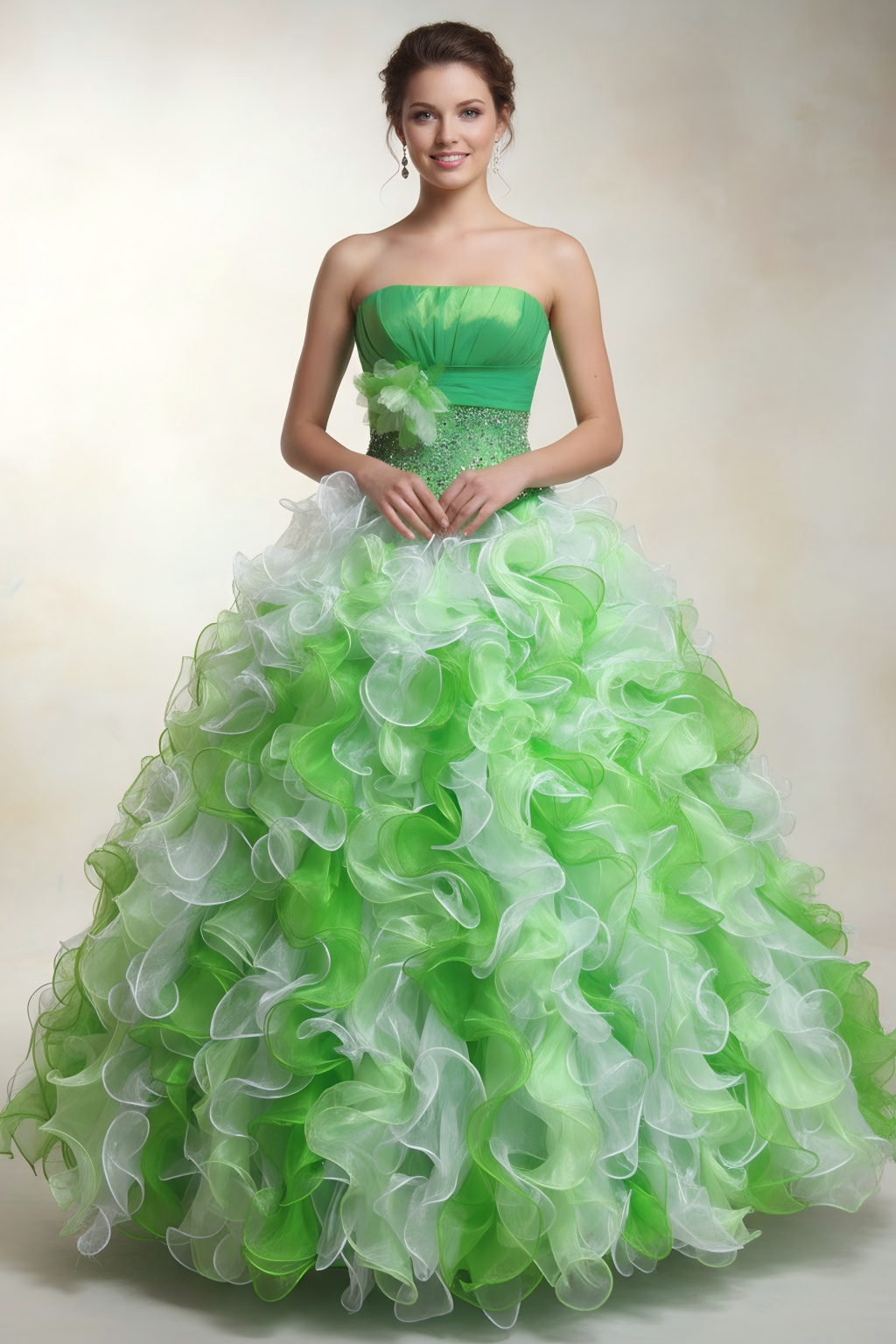
● Hoop skirt: A petticoat with actual boning or hoops sewn in, used for dramatic ballgown shapes.
For A-line dresses, you're almost never reaching for a hoop skirt. That's ballgown territory. A soft to medium tulle petticoat is usually the right call.
Think of a bridal slip as the quiet background singer. It's there, it's doing something, but nobody's going to notice it. A petticoat is more like the drummer keeping the beat, you can actually feel. Both matter, but they're solving different problems.
One more thing worth knowing: The fabric weight of the petticoat itself changes the effect. A single-layer soft tulle petticoat barely registers under your dress. Stack three or four layers, or switch to a stiffer nylon tulle, and suddenly you've got real lift. That's the range you're shopping within once you decide you want one.
What Makes the A-Line Silhouette Different
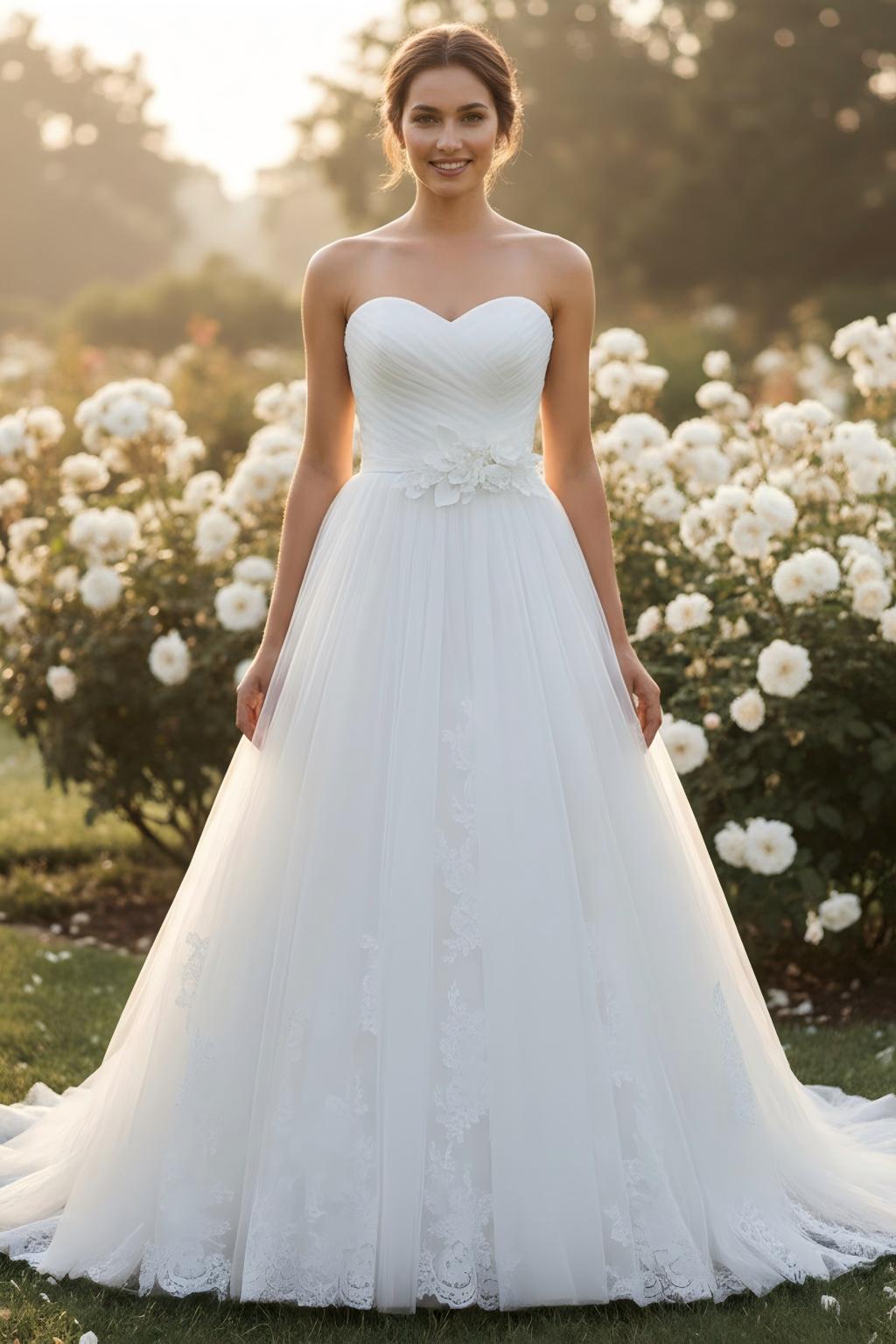
Picture a capital letter A. Narrow at the top, gradually widening toward the bottom. That's the whole idea behind an A-line dress.
Compare that to a ballgown, which drops from a fitted bodice into a huge, dramatic skirt, or a mermaid cut, which hugs the body until it flares out near the knee. A-line sits right in the middle. It's fitted through the waist and hip, then flows outward without going overboard.
Because the shape is already built into the seams, A-line dresses generally need less structural help than ballgowns do. A ballgown practically demands a hoop or heavy crinoline to hit that iconic full-skirt look. An A-line dress can often get by on the cut alone.
That doesn't mean a petticoat never helps. It just means the dress isn't desperate for one.
Here's a way to picture it. A ball gown is like a tent. The structure underneath is basically the tent poles, and without them, the whole thing collapses. An A-line dress is more like a well-cut coat. The shape holds up fine on a hanger, and a petticoat is just an optional lining that adds a bit of extra body when you want it.
Construction matters here, too. Bridal designers often build a horsehair braid into the hem of an A-line skirt, which is a stiff woven trim sewn along the inside edge. That trim alone can give enough shape that a petticoat becomes a "nice to have" instead of a "must have." If you're not sure whether your dress has one, run your fingers along the inside hem. If you feel a slightly stiff, ribbon-like edge, that's your answer.
Do A-Line Wedding Dresses Need a Petticoat?
Here's where I give you the real breakdown, not a wishy-washy "it depends" and nothing else.
When You Likely Need One
● Your dress is made from soft, drapey fabric like chiffon or crepe, and it's clinging more than flowing.
● You want extra fullness for a fuller, more traditional bridal look.
● Your dress has a train, and you want it to hold its shape through hours of photos and dancing.
● Your gown feels a little flat or lifeless when you try it on without anything underneath.
Think of it like blow-drying your hair versus letting it air dry. Air drying is fine. Blow-drying with some volume spray gives you the lift you didn't know you were missing. A petticoat is basically a volume spray for your skirt.
When You Can Skip It
● Your dress uses structured fabric like satin or mikado that already holds its A-line shape well.
● You're going for a relaxed, boho, or beach-wedding vibe.
● Your gown has built-in lining or a horsehair hem that gives it natural body.
● You've tried the dress on, and you genuinely love how it moves without extra layers.
I had a bride last spring who tried on her chiffon A-line dress, convinced she needed a petticoat because that's "what brides do." We put one on, took it off, put it back on again. Without it, the dress moved like water when she walked. She skipped the petticoat entirely and never looked back.
I also fitted a bride in a satin-crepe A-line with a small cathedral train who insisted she didn't want "one more thing" under her dress. Fair enough, budgets matter. But once we got her walking down a mock aisle, the train dragged flat and lost its shape within a few steps. A lightweight petticoat under just the back panel gave the train enough lift to hold its line all the way through the ceremony and photos. Sometimes it's not the whole skirt that needs help. Sometimes it's just one section.
Ready to see what a petticoat can do for your dress? Browse our full collection of bridal petticoats and underskirts to find the right support for your A-line gown.
A-Line With vs. Without a Petticoat: Comparison Table
|
Factor |
With Petticoat |
Without Petticoat |
|
Silhouette |
Fuller, more defined A-shape |
Softer, natural drape |
|
Best fabric match |
Chiffon, crepe, lightweight satin |
Structured satin, mikado, taffeta |
|
Comfort |
Slightly warmer, more layers |
Cooler, lighter to move in |
|
Cost |
Added expense ($30–$150 typical range) |
No extra cost |
|
Best for |
Traditional look, photos, indoor venues |
Boho, beach, minimalist weddings |
|
Movement |
More structured, less clingy |
More fluid, closer to the body |
A-Line vs. Ballgown Petticoat Needs
Ballgowns almost always need serious structure underneath, often a hoop or heavy multi-layer crinoline, because the skirt volume is the entire point of the silhouette. A-line dresses are more flexible. You're choosing whether to enhance a shape that already exists, not creating one from scratch.
That distinction matters when you're comparing prices, too. Ballgown petticoats tend to run higher because they use more fabric and often include boning or hoop wire. A-line petticoats are usually simpler, lighter, and cheaper, which is one more reason it's worth confirming you actually need one before adding it to your budget.
How to Choose the Right Petticoat for Your A-Line Dress
Picking a petticoat isn't complicated, but a few details matter more than people expect.
Match the Length
Your petticoat should sit about half an inch to an inch shorter than your dress hem. Too long and it peeks out. Too short, and it does nothing for the shape near your feet.
Choose Your Stiffness Level
● Soft tulle petticoat: Subtle lift, works well under lightweight A-line fabrics.
● Medium-stiff petticoat: Noticeable fullness without looking costume-y.
● Stiff or hooped style: Reserved for dramatic, ballgown-adjacent A-line cuts.
A good rule of thumb: Match the stiffness to how much volume your dress fabric can visually support. A soft crepe A-line paired with a stiff crinoline can look like the fabric is fighting the petticoat underneath it. It's a bit like putting a heavy-duty phone case on a paper-thin phone. The proportions just feel off.
Think About Season and Comfort
Destination and summer brides, take note. Extra tulle layers trap heat. If you're saying "I do" on a beach in July, a lightweight or minimal petticoat (or none at all) keeps you cooler and more comfortable through the whole day.
A Note for Plus-Size Brides
Petticoats can be genuinely flattering on plus-size A-line dresses because they help the skirt stand away from the body instead of clinging. The key is proportion. A petticoat that's too full relative to the bodice can throw off your overall shape, so trying pieces on together (dress plus petticoat, not separately) really matters here.
A mid-volume tulle petticoat tends to work best for plus-size A-line gowns. It adds enough structure to create separation between the body and the fabric without ballooning out into ballgown territory. If your dress already has a fuller skirt panel built in, ask your stylist whether a petticoat is even necessary before you add one on top of an already generous cut.
Common Mistakes Brides Make With Petticoats
I've seen these happen more times than I can count:
● Buying the wrong length. Always measure against your actual dress hem, not a guess.
● Choosing something too stiff for the fabric. Soft fabric plus stiff petticoat equals an awkward, boxy look.
● Never try them on together. A petticoat that looks great alone can completely change how your dress hangs. Test the full outfit before your big day, not the morning of.
● Assuming every A-line needs one. As we covered, plenty don't.
● Forgetting about the bustle. If your dress has bustles for the reception, make sure your petticoat doesn't interfere with the bustle points.
Final Words
There's no universal rule here, and honestly, that's good news. It means you get to decide based on your actual dress, your fabric, and the wedding you're picturing in your head.
Try your gown on without anything underneath first. If it already moves and holds shape the way you want, you're done. If it feels a little flat, a petticoat can fix that in about thirty seconds flat, no pun intended.
And if you're still torn, bring the question to your fitting appointment instead of guessing at home. A stylist can hold a petticoat up against your actual dress and show you the difference in about two minutes. That's a lot faster and cheaper than ordering three options online and returning the two you didn't need.
Still not sure which way to go? Browse our A-line wedding dress collection alongside matching petticoats and accessories, or reach out to our Customer Care team for a personalized fit recommendation. No pressure, no upsell, just honest advice on what will actually work for your dress.
Frequently Asked Questions
Does every wedding dress need a petticoat?
No. It depends on the dress's fabric, structure, and desired silhouette. Structured A-line and ballgown dresses often need one; soft, flowy, or already-lined dresses often don't.
Can I wear a petticoat under a soft A-line dress?
Yes. A soft tulle petticoat can add gentle volume to lightweight fabrics like chiffon without making the dress feel stiff or heavy.
Will a petticoat make my A-line dress look like a ballgown?
Only if you choose a very stiff or heavily layered style. A soft to medium petticoat enhances the A-line shape without turning it into a full ballgown silhouette.
Is a petticoat comfortable for an outdoor or summer wedding?
It can run warm since it adds layers. For hot climates or beach weddings, a lightweight petticoat (or skipping it entirely) usually feels more comfortable.
How do I know my dress size petticoat?
Match the petticoat length to your dress hem length, and check the waist or hip measurement against the sizing chart for the specific style you're considering. When in doubt, check a size and fit guide before buying.