Cart
0
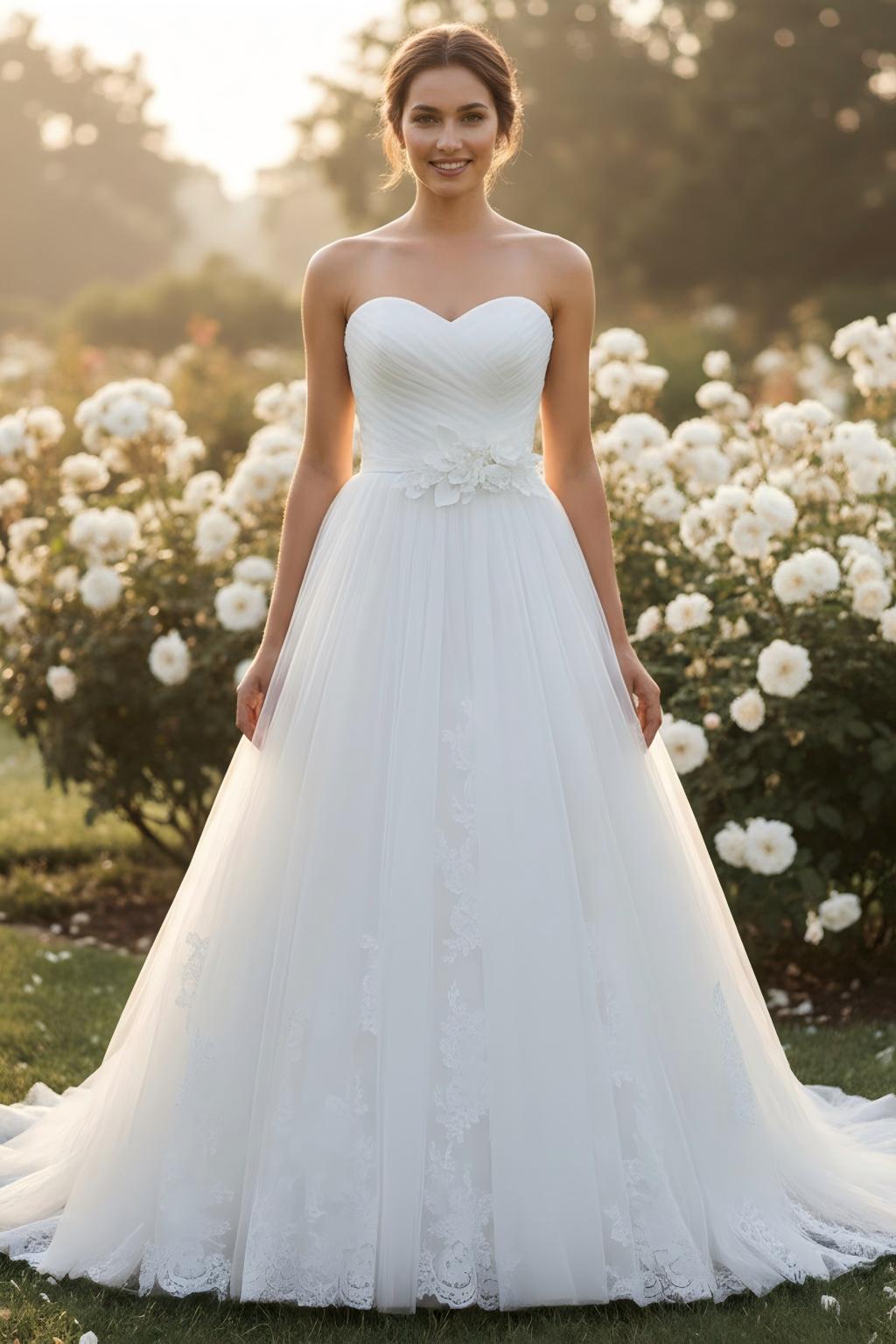
You found the dress. It's on some website you've never heard of, the price is half what your local boutique quoted, and the photos look stunning. Now what?
Here's the honest answer: buying A-line wedding dresses online can absolutely work out, but only if you know what to check before you enter your card details. I've spent years around bridal fashion, watching brides get exactly the dress they dreamed of and, occasionally, watching them get a shapeless polyester disappointment two weeks before the big day. The difference almost never comes down to luck. It comes down to a handful of things savvy shoppers check, and everyone else skips.
This guide walks you through exactly what those things are. No fluff, no vague "shop smart" advice. Just a real framework you can use today, whether you're eyeing OneWedDress or comparing five different sites in browser tabs right now.
What Is an A-Line Wedding Dress, and Who Does It Flatter?

An A-line wedding dress is fitted through the bodice and gently flares out from the waist to the hem, forming the shape of a capital letter A. Simple as that.
No dramatic poof. No clingy mermaid tail. Just a clean, balanced silhouette that's been a bridal staple for decades because it works on nearly everybody.
Here's why it's so universally flattering:
● Pear-shaped brides get visual balance; the flare skims over hips instead of hugging them.
● Hourglass figures get a defined waist without feeling squeezed.
● Petite brides avoid being swallowed by fabric, since the silhouette doesn't add unnecessary bulk.
● Plus-size brides often find A-line more comfortable than fitted styles because it moves with the body instead of fighting it.
If you're not sure whether an A-line is right for you, think of it this way: a mermaid dress dares you to have zero room for a big meal at the reception. An A-line dress does not care what you eat. That alone makes it one of the most practical silhouettes for an entire day of standing, hugging, dancing, and eating cake.
Is It Safe to Buy a Wedding Dress Online?
Yes, as long as the retailer gives you a detailed size chart, a clear return policy, and a real way to reach customer support before you buy. If any one of those three is missing or vague, treat it as a warning sign, not a minor inconvenience.
The risk isn't really about "online shopping" in general. You buy shoes and furniture online all the time without drama. The risk is specific to bridal:
1. Wedding dresses are almost never one-size-fits-all, and sizing charts vary wildly between brands.
2. There's usually only one shot; you can't easily "try again" two days before the ceremony.
3. Some sites use stock photography or stolen images that don't match what actually ships.
None of that means avoid online shopping altogether. It means shop like someone who's read this article, not like someone clicking "buy now" off an Instagram ad at midnight.
5 Signs of a Trustworthy Online Bridal Retailer (And the Red Flags That Aren't)
I want to save you the trial and error here. Below is a straight comparison of what a legitimate seller does versus what a shady one does.
|
Trust Signal |
Trustworthy Retailer |
Red Flag Retailer |
|
Size guide |
Detailed measurement chart with instructions on how to measure yourself |
Generic S/M/L labels with no measurements |
|
Return policy |
Clearly stated timeframe, conditions, and process, posted before checkout |
Buried, vague, or "final sale, no exceptions" with zero explanation |
|
Customer support |
Real email, phone number, or live chat that gets a response |
Contact form only, no reply for days (or ever) |
|
Product photos |
Multiple angles, real fabric close-ups, sometimes video |
One glamorous hero shot, suspiciously professional lighting |
|
Shipping info |
Specific timeframes by dress type (made-to-order vs. in-stock) |
"Fast shipping!" with no actual dates or tracking mentioned |
Here's a quick gut check you can run in under two minutes: search the brand name plus the word "reviews," then look specifically for photos customers uploaded themselves. Polished product-page photography tells you nothing. A bride's own phone photo of the dress on her actual body tells you everything.
Why the Return Policy Matters More Than the Price Tag
I'll say something that might sound backwards: the return policy is more important than the price.
A $200 dress with no return option is a bigger financial risk than a $400 dress with a 30-day exchange window. If the sizing is off, you're not just out of the money, you're out of time, and time is the one thing you can't buy back before a wedding date.
Before you check out, find the answers to these three questions:
● Can I exchange it for a different size if it doesn't fit?
● Is there a window for custom-order alterations if my measurements change?
● Who pays for return shipping, me or them?
If a site can't answer all three clearly on their own policy page, that's your answer right there.
How to Get Your Sizing Right When Buying Online
This is where most online wedding dress disasters actually happen. Not fraud. Not scams. Just a bride who ordered her "usual size" instead of measuring herself.
Here's the thing nobody tells you: your everyday clothing size and your bridal size are often completely different numbers. A dress brand's "size 10" might correspond to a 34-inch bust, while your favorite jeans brand's size 10 assumes something totally different. Bridal sizing tends to run smaller and more precise because these gowns are built for a single, specific moment, not for general comfort across a whole wardrobe.
Step-by-Step: Measuring Yourself for an Online Wedding Dress
1. Grab a soft measuring tape, not a metal one. Have someone help you if possible; self-measuring your own back is genuinely awkward.
2. Measure your bust at the fullest part, keeping the tape level around your back.
3. Measure your natural waist, which is the narrowest point, usually just above your belly button, not where your pants sit.
4. Measure your hips at the widest point, typically 7-9 inches below your waist.
5. Compare all three numbers against the retailer's specific size chart, never against a size you "usually wear."
6. When you fall between two sizes, size up. Taking a dress in is far easier and cheaper than letting one out.
Made-to-order dresses take this a step further, often letting you submit custom measurements rather than picking from a standard chart. This matters enormously if your bust, waist, and hip proportions don't neatly match a standard size grid, which, honestly, describes most people.
How to Judge Fabric and Construction Quality From Photos Alone
This one trips up even careful shoppers. You can't touch the fabric before you buy, so you have to read the listing like a detective.
Start with the fabric name itself. Real bridal fabrics have real names: chiffon, satin, tulle, organza, crepe, mikado. If a listing just says "premium fabric" or "high-quality material" with no actual fabric type named, that's a gap worth noticing. Legitimate manufacturers know exactly what they're using and aren't shy about saying so.
Next, zoom into any close-up shots. You're looking for:
● Clean seams: No visible puckering or uneven stitching where panels meet
● Consistent lace placement: Motifs that repeat in a deliberate pattern, not randomly scattered
● Structured lining: A slightly visible layer underneath sheer fabric, which affects both opacity and how the dress holds its shape
● Boning or structure at the bodice: Mentioned explicitly if the style claims to be supportive
Here's a comparison that helps: think about buying a mattress online versus buying a t-shirt online. A t-shirt going slightly wrong costs you twenty dollars and mild annoyance. A mattress going wrong means weeks of bad sleep and a complicated return. Treat a wedding dress like a mattress, not a t-shirt; the stakes and the scrutiny should match.
One more habit worth building: read the product description for construction details, not just style adjectives. "Romantic and dreamy" tells you nothing. "Fully lined bodice with boning and a corset back closure" tells you exactly what you're getting.
Understanding Shipping Timelines Before You Order
Shipping is where a lot of otherwise-careful brides get caught off guard, mostly because they assume "online" means "fast," the way a same-day grocery delivery might be.
Wedding dresses don't work that way, and here's why. Most A-line gowns sold online fall into one of two categories:
● Ready-to-ship dresses: Pre-made in standard sizes, typically shipping within 1-2 weeks.
● Made-to-order or custom dresses: Cut and assembled after you order, often taking 6-12 weeks before they even ship, plus transit time on top of that.
A retailer that's upfront about which category your dress falls into, and gives you an actual date range instead of a vague promise, is doing you a favor. Build in a buffer, no matter what they quote, factories run behind sometimes, and customs holds happen on international orders. A good rule of thumb: order at least a month earlier than the estimated timeline suggests you need to.
If your wedding date is within two months, ask the retailer directly whether rush production is available before you assume it's off the table. Many sites offer it quietly, but only if you ask.
What to Check Before You Click "Buy"
Think of this as your final walkthrough. Run down this checklist before you enter payment info on any bridal site:
● Size guide includes actual measurements, not just letter sizes
● Return or exchange policy is stated clearly before checkout
● There's a real way to contact customer service, and it's been tested
● Shipping timeline is specific (weeks, not "fast")
● Payment page uses secure checkout (look for the padlock icon and "https")
● Reviews include customer photos, not just star ratings
● Fabric and construction details are listed, not just "beautiful lace"
If a site checks every box, you're in good hands. If it's missing two or more, keep looking; no dress is worth the stress of a shipping black hole three weeks before your wedding.
How OneWedDress Approaches Buyer Protection
I'll be direct about this part, because pretending otherwise would undercut everything I just told you about trust.
At OneWedDress, we built our process around the exact checklist above, not because it's clever marketing, but because we watched too many brides get burned by vague policies elsewhere. Every dress listing includes a detailed size and color guide, so you're measuring against real numbers instead of guessing. Orders can be placed online or by email, whichever feels more comfortable, and our customer care team is reachable throughout the process, not just before you pay.
We ship worldwide, and our checkout runs on secure payment processing, so your card details aren't the weak link in this transaction. If something needs adjusting, our order status and return information are laid out clearly, not buried three menus deep.
None of that replaces doing your own homework, though. Even with us, run through the checklist. That's exactly the point: a retailer that's confident in its process wants you to check.
The Bottom Line
Buying an A-line wedding dress online isn't a gamble if you treat it like the decision it actually is. Check the size chart. Read the return policy before you need it, not after. Test the customer service line with a real question. Look at customer photos, not just the hero shot.
Do that, and the "burned" part of this whole equation disappears. You're left with what you actually wanted from the start: a beautiful dress, a fair price, and zero surprises when the box shows up at your door.
Ready to see the collection? Browse A-line wedding dresses at OneWedDress, check your measurements against our size guide, or reach out to our customer care team with any questions before you order. We'd rather answer three extra questions now than have you deal with one problem later.
Frequently Asked Questions
What is an A-line wedding dress?
An A-line wedding dress is fitted at the bodice and flares gradually from the waist to the hem, creating the shape of a capital letter A. It's one of the most flattering and universally wearable bridal silhouettes because it skims the body instead of clinging to it.
Are A-line wedding dresses good for plus-size brides?
Yes. A-line silhouettes are frequently recommended for plus-size brides because the flared skirt moves with the body and doesn't emphasize the hip or thigh area the way a fitted mermaid style would. Comfort across a long wedding day is also a major factor. A-line allows for easier movement and sitting.
How much do A-line wedding dresses cost online?
Online A-line wedding dresses typically range from around $150 for simpler, ready-to-ship styles to $600 or more for made-to-order gowns with detailed lace, beading, or custom sizing. Prices online tend to run lower than boutique prices for comparable craftsmanship, since online retailers skip the overhead of a physical showroom.
How do I measure myself for an online wedding dress order?
Measure your bust at its fullest point, your natural waist at its narrowest point, and your hips at their widest point, using a soft measuring tape. Compare these three numbers directly against the retailer's specific size chart rather than relying on your usual clothing size.
What if my online wedding dress doesn't fit when it arrives?
Check the retailer's return or exchange policy before you order, reputable sellers allow exchanges or alterations within a set window. Contact customer support immediately if there's a sizing issue, since most retailers need advance notice to process a return, exchange, or rush alteration.
How far in advance should I order an A-line wedding dress online?
Order at least 3 to 6 months before your wedding date if you're going with a made-to-order dress, and allow extra time for alterations after it arrives. Ready-to-ship styles can be ordered closer to the date, but even then, give yourself a buffer of at least 4-6 weeks for shipping and any needed adjustments.