Cart
0
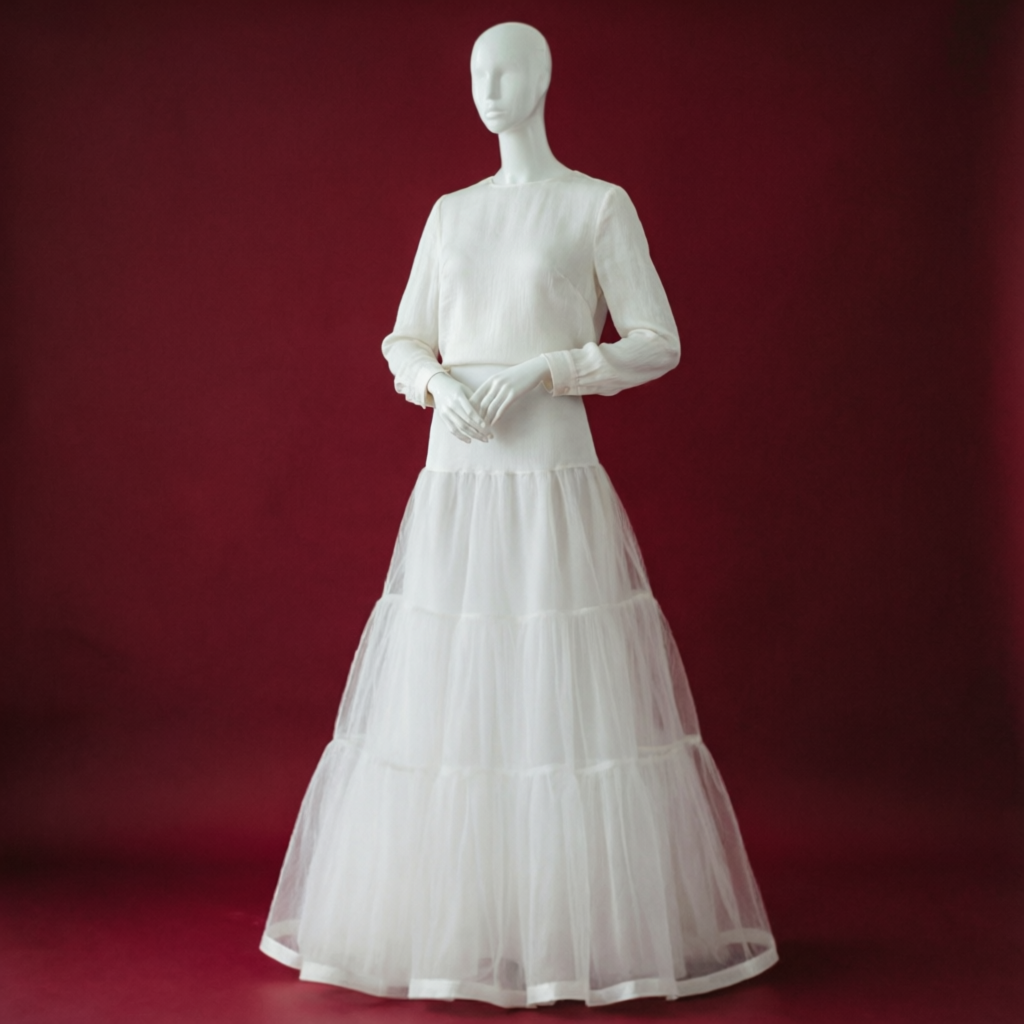

If you've started shopping for a petticoat for your A-line dress, you've probably noticed something confusing fast: half the listings are soft and simple, the other half look like they belong under a Disney costume. That's not a coincidence. A-line petticoats and ball gown petticoats are built for two completely different jobs, and grabbing the wrong one changes how your whole dress looks and moves.
I've watched brides swap petticoats mid-fitting and audibly gasp at how different the same dress suddenly looked. It's not a minor styling choice. The right petticoat lets your A-line dress do what it was designed to do. The wrong one fights you all night.
This guide walks through what a petticoat for an A-line dress should actually look like, how it differs from a ball gown petticoat, and how to land on the right length and fit before you order.
What an A-Line Silhouette Actually Needs
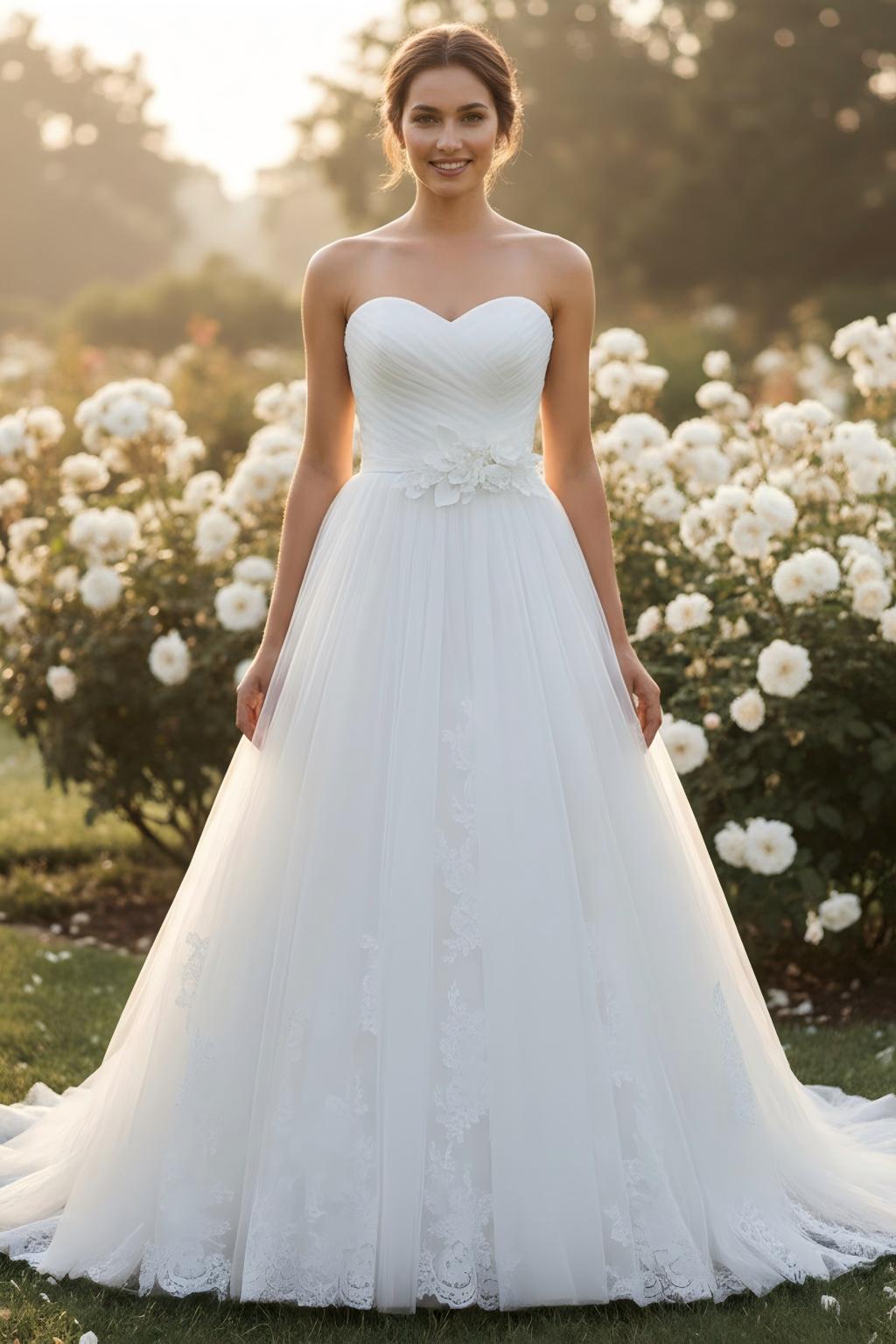
An A-line dress is fitted through the bodice and hips, then flares out gradually toward the hem, like a capital letter "A," a steady taper with no sudden jump in width. That's why A-line is the most forgiving silhouette on the market. It flatters a wide range of body types because it doesn't rely on a specific waist-to-hip ratio to look intentional.
The petticoat underneath has to respect that gentleness. A soft, graduated tulle underskirt adds just enough lift to keep the taper looking natural. Put a hooped ball gown petticoat under that same dress, and the soft "A" turns into a stiff triangle. It reads like a costume, not a wedding gown.
Why Ball Gown Petticoats Are Built Differently
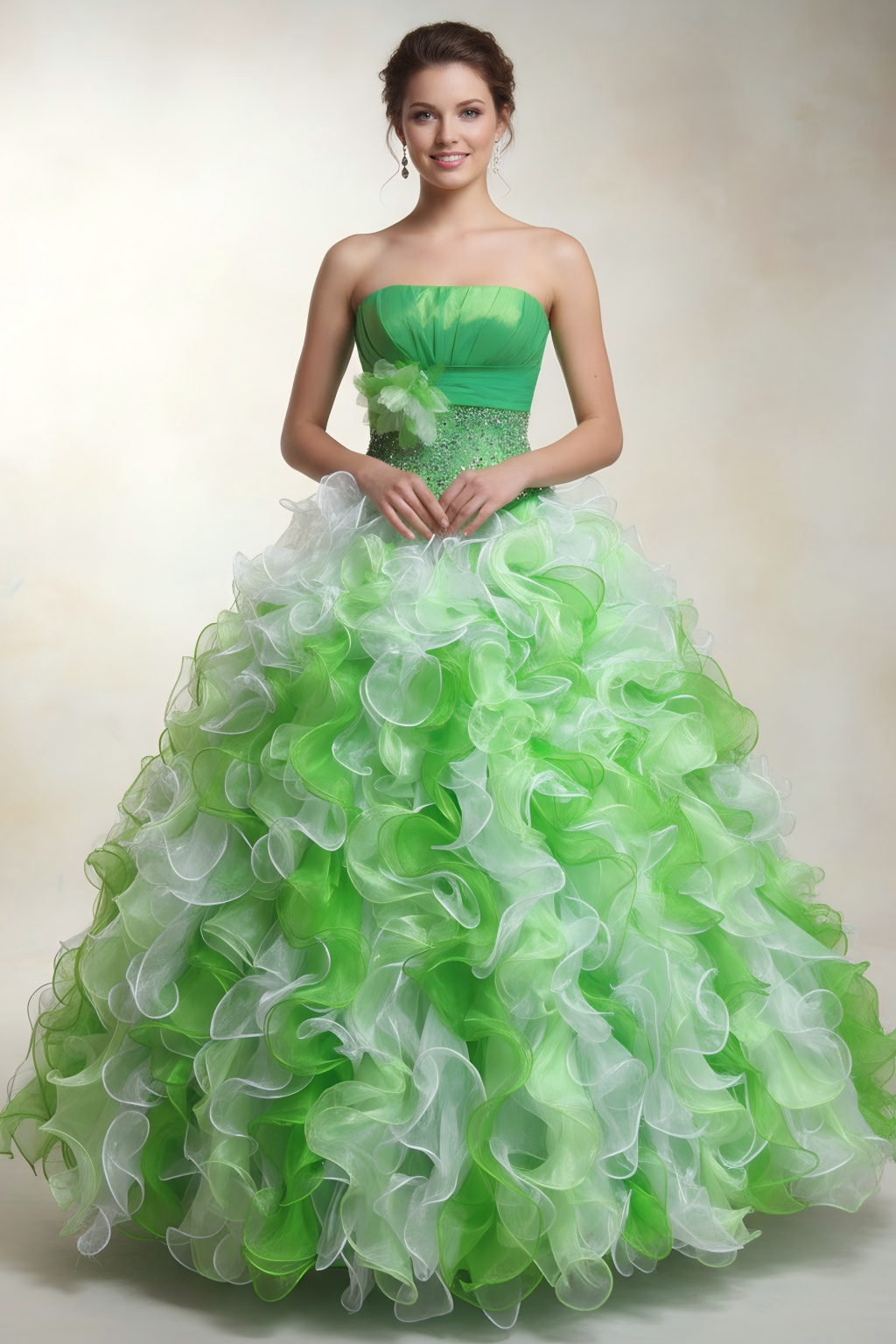
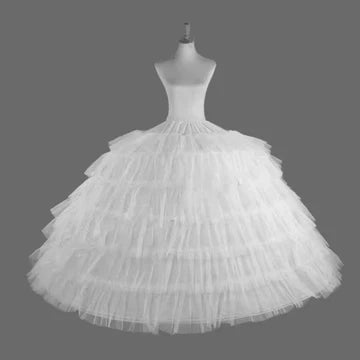
A ball gown is fitted at the bodice and waist, then drops into a full, dramatic skirt, think Cinderella, think a hem that needs its own zip code to twirl in. Fabric alone can't hold that kind of volume, so ball gown petticoats rely on hooped bands or heavy boning to do the structural work. Without one, the skirt just collapses into a puddle of fabric around your ankles.
That's the opposite engineering problem from an A-line dress, which is exactly why the two petticoats aren't interchangeable, even though sellers sometimes list them side by side as if they were.
Petticoat vs. Crinoline: Quick Clarification
People use these words interchangeably now, but there's a technical difference worth knowing before you shop.
A crinoline is a stiffened underskirt, historically built with horsehair or steel hoops, made specifically to hold a skirt's shape. Petticoat is the broader, modern umbrella term for any underskirt that adds shape, volume, or coverage. So every crinoline is a petticoat, but a soft tulle underskirt with no boning is still a petticoat too; it's just not doing the structural heavy lifting a crinoline does.
Most bridal shops today just say "petticoat" for everything and describe the construction (hooped, boned, layered tulle) separately. That's the convention this guide follows, too.
A-Line Petticoat vs. Ball Gown Petticoat: Side-by-Side
|
Feature |
A-Line Petticoat |
Ball Gown Petticoat |
|
Core material |
Soft, graduated tulle layers |
Hooped bands, boning, or heavily layered stiff netting |
|
Volume level |
Light to moderate |
High to dramatic |
|
Structure type |
Fabric-driven flare |
Frame-driven support |
|
Best dress type |
A-line, trumpet, slim mermaid overlays |
Full ball gown, princess-style skirts |
|
Comfort |
Lightweight, easy to sit in |
Bulkier, takes some getting used to |
|
Typical price |
$40–$90 |
$70–$150 |
|
Sound & movement |
Quiet rustle |
Can shift or click as hoop bands settle |
The price gap tracks with the construction. A ball gown petticoat is essentially a small engineering project. A petticoat for an A-line dress is closer to a few well-cut yards of tulle.
Bridal Petticoat Terms Worth Knowing
Sellers don't always use these terms consistently, so it helps to know what they actually mean before you decipher a vague product listing.
● A-line petticoat: A soft underskirt of graduated tulle layers that adds gentle flare without stiff structure.
● Ball gown petticoat: A structured underskirt with hoops or heavy boning, built for dramatic, rounded volume.
● Crinoline: A stiffened underskirt, historically made with horsehair or steel hoops, that holds out a skirt's shape.
● Hoop skirt: Circular bands sewn into fabric channels that push a skirt outward into a fixed shape.
● Birdcage hoop: A lighter hoop skirt made from a few widely spaced bands instead of a solid frame.
● Tulle underskirt: Netted fabric sewn in tiers to add width and movement without rigid support.
● Godet: A triangular fabric insert added into a seam for extra flare at the hem.
● Boning: Thin, rigid strips sewn into fabric channels, usually at the waist or bodice, to reinforce shape.
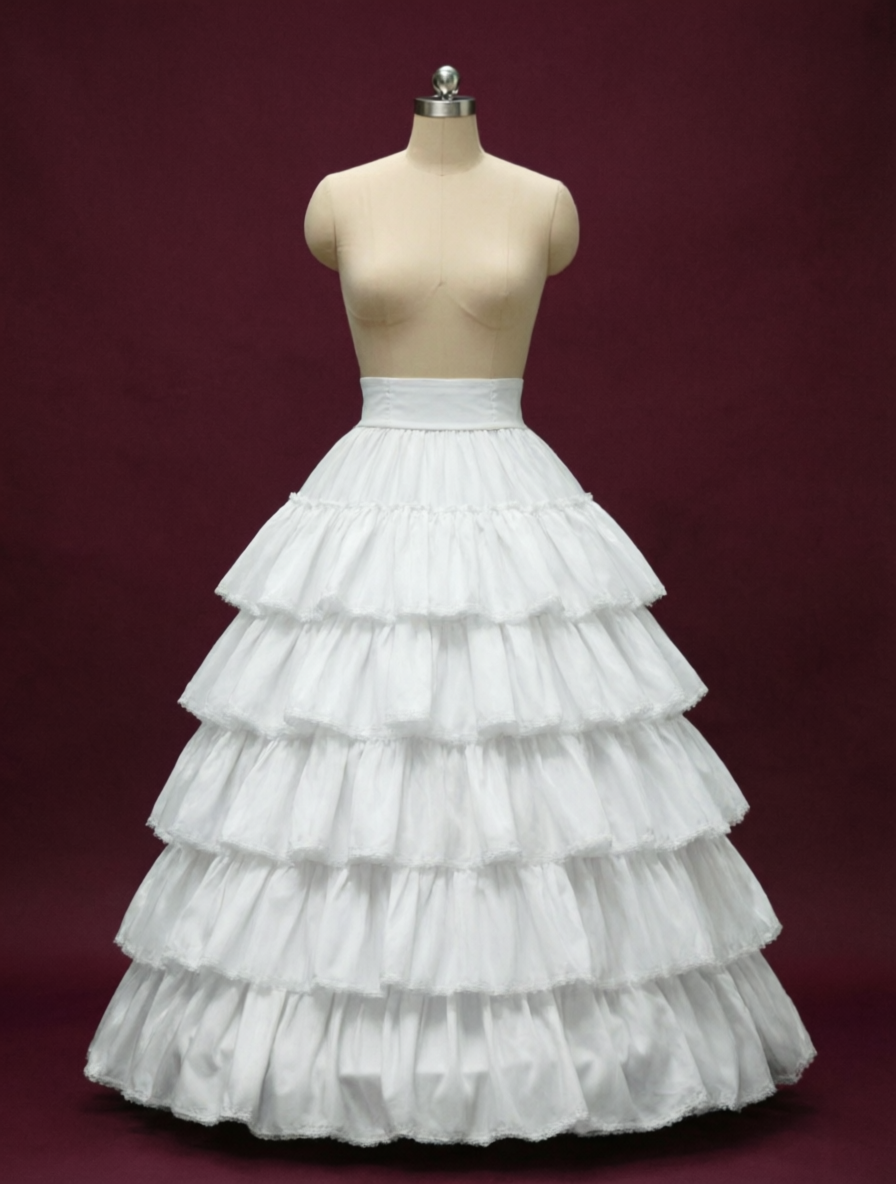
● Tiered netting: Layers of stiff mesh, each wider than the one above, stacked to build volume gradually.
How Tulle Layering Creates Natural Flare
Each layer of tulle adds a small amount of lift on its own. Stack three to five graduated layers, each a bit wider than the one above it, and they push against each other just enough to create flare without stiffness.
It works a lot like a paper fan: one sheet lies flat, but fold several sheets and open them, and you get structure and movement together, without a single rigid piece anywhere in it. That's why a petticoat for an A-line dress feels so different against the skin compared to a hooped one — soft and brushing instead of a hard edge. If you're sensitive to itchy fabric, look for a petticoat with a soft lining sewn against the top layer.
Notes From Our Fitting Room
A few patterns show up over and over when brides come in to try on A-line dresses:
● The most common return reason is buying a petticoat meant for a ball gown by mistake, as it adds far too much volume and changes the whole silhouette.
● The most frequent fitting-room question is whether the petticoat will peek out at the hem. It only shows if the petticoat runs longer than the dress.
● Most brides try their dress on a second time with a different petticoat before deciding. The first one rarely feels right on the first attempt.
Do You Even Need a Petticoat Under an A-Line Dress?
Not always, even though "yes" would sell more petticoats.
You probably need one if:
● Your dress designer specifically calls for one in the construction notes
● Your fabric is soft and drapey (chiffon, crepe) and needs help holding shape
● You want extra fullness that the fabric alone doesn't give you
You probably don't if:
● Your dress is made from structured fabric like heavy satin or Mikado, which already holds its shape
● Your dress already has built-in tulle or organza layers underneath
● You want a sleeker, closer-to-body look
If your dress already looks full and holds its shape when you walk during a fitting, adding a petticoat might work against the design rather than help it. When in doubt, ask your seamstress before assuming you need one.
How to Choose the Right Petticoat Length and Fit
 A petticoat has to sit shorter than your dress, or fabric will poke out at the hem. Most run 24 to 30 inches, depending on your dress's hem height. As a rule of thumb, subtract 1 to 2 inches from your dress's finished hem length to land on your petticoat length.
To measure yourself correctly:
1. Put on the shoes you'll wear on the wedding day
2. Measure from your natural waistline down to the floor
3. Subtract 1 to 2 inches from that number for your petticoat length
4. Check the waist and hip measurements against the petticoat's own size chart, not your dress size
Petticoat sizing rarely lines up with dress sizing. A "medium" from one brand can fit completely differently from another brand's medium, so measure against the actual chart every time.
Common Mistakes When Pairing a Petticoat With an A-Line Dress
● Choosing volume by eye instead of by dress type. A petticoat that looks impressive on a hanger can swallow a slim A-line silhouette once it's actually underneath the dress.
● Skipping the sit-down test. Some petticoats look great standing, but turn bulky the second you sit down at the reception.
● Ignoring fabric compatibility. Satin and lace behave differently over a stiff petticoat than chiffon does — satin, especially, can cling and create static against certain synthetic tulle blends.
● Buying length by dress size instead of actual measurement. Two dresses in the same size can have very different hem heights depending on the designer.
● Assuming more layers always means better. Past a certain point, extra layers just add heat and weight without changing the shape much.
A Simple Framework for Choosing Your Petticoat
Three questions settle this for almost every bride:
1. What's my dress silhouette? A-line calls for soft tulle layers. A ball gown calls for a hooped or heavily boned structure.
2. How much volume does my fabric already give me? Heavier or already-layered fabric may need little to no petticoat at all.
3. What's my comfort priority for the day? If you're dancing all night, lighter and more flexible almost always beats maximum drama.
Answer those three, and you've basically chosen your petticoat category before you even try one on.
How to Care for and Store Your Petticoat Before the Wedding
Most brides buy their petticoats weeks, sometimes months, ahead of the wedding, which means they have to survive a lot of closet time without going flat or crushed.
Hang it, don't fold it. Tulle holds a crease the same way paper does. Folding a petticoat and leaving it in a drawer for a month will leave visible lines in the netting that don't always shake out. Hang it on a padded hanger, ideally inside a garment bag to keep dust and pet hair off the layers.
Give it room to breathe. Cramming a full petticoat into a tightly packed closet flattens the tiers against whatever's next to it. If closet space is tight, even hanging it on the back of a door works better than wedging it between other garments.
Steam, don't iron. Heat from a direct iron can melt or singe synthetic tulle. If the layers look flat a day or two before the wedding, hang the petticoat in the bathroom while you run a hot shower, or use a handheld garment steamer held a few inches away. That's usually enough to spring the netting back into shape.
Do a final fluff the morning of. Even a well-stored petticoat compresses a little during travel to the venue. Give each tier a gentle shake and separate the layers by hand before you put the dress on, it takes thirty seconds and makes a noticeable difference in how full the skirt looks in photos.
Pack a backup plan for destination or travel weddings. If the petticoat is flying in a suitcase, pack it on top of everything else, loosely rolled rather than folded flat, and plan to steam it on arrival. Checked luggage compression is one of the most common reasons brides end up steaming a petticoat the morning of the wedding instead of the night before.
Final Thoughts
A petticoat isn't just an add-on, it's part of how your dress behaves for the entire day, from the ceremony aisle to the last dance. Matching the right petticoat to your silhouette protects the shape your designer intended in the first place. Get it wrong, and even a beautifully made dress can look off in photos.
Still deciding? Browse OneWedDress's A-line dress collection alongside our petticoat accessories, or check our size guide before ordering. Our customer care team can also help match a petticoat to your specific dress if you're not sure where to start.
Frequently Asked Questions
What kind of petticoat should I use for an A-line dress?
Look for a soft, graduated tulle petticoat rather than a hooped or heavily boned one. Tulle layers add a gentle flare that matches an A-line's natural taper without adding stiff structure.
Is a crinoline the same as a petticoat?
Not exactly. A crinoline is a stiffened underskirt, often built with horsehair or steel hoops, made to hold its shape. Petticoat is the broader term for any underskirt, soft or structured.
Can I wear a ball gown petticoat under an A-line dress?
You can, but it will distort the silhouette. The extra volume from the hoops turns a gentle A-line taper into a stiff, triangular shape that looks unintentional.
How many layers should an A-line petticoat have?
Three to five graduated tulle layers are the sweet spot for most A-line dresses. More than that adds weight and heat without meaningfully changing the shape.
Do all A-line wedding dresses need a petticoat?
No. Dresses made from structured fabric like heavy satin or dresses with built-in underlayers often don't need an additional petticoat.