Cart
0
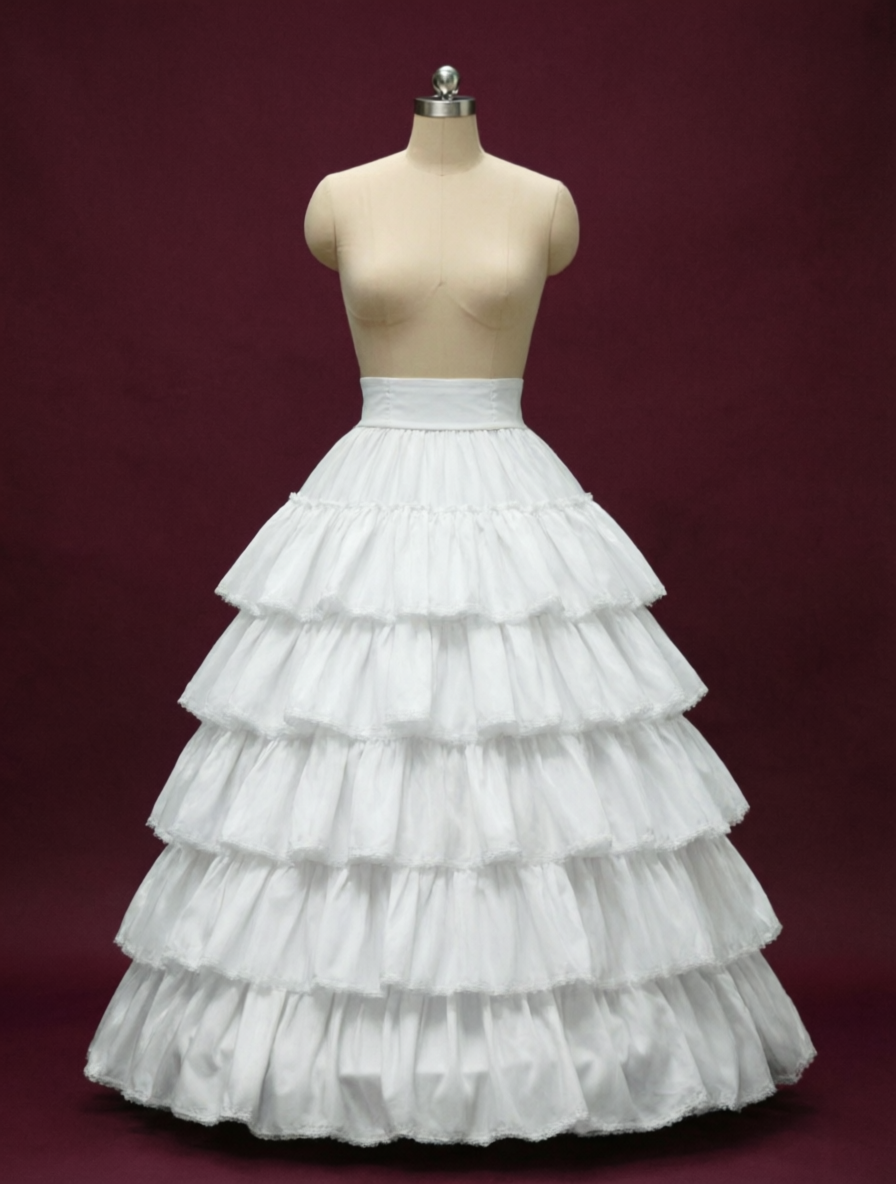

Your dress is perfect. Your shoes are broken in. And then, three hours into your reception, you're subtly shifting your weight because something under your gown is scratching your thigh. Nobody warns brides about this part.
Petticoat irritation is real, it's common, and it's completely avoidable once you know what to check before you buy. Choosing a non-irritating bridal petticoat comes down to five things: the fabric, the breathability, the waistband construction, the structure type, and the fit. Get those right, and you'll forget you're wearing it at all, which is exactly the point.
That's true whether you're a bride shopping for one, or a boutique owner sourcing floor crinolines by the dozen from a manufacturer for your own racks. The checks are the same either way, just the batch size changes. Here's the checklist, step by step.
Quick Steps:
● Identify what's actually causing the itch or friction before you shop
● Check the underskirt material for soft, finished edges
● Test for breathability, not just volume
● Inspect the waistband for covered elastic and smart seam placement
● Pick a structure, hoop, crinoline, or slip that matches your dress and comfort tolerance
● Confirm sizing against your actual gown, not your dress size
● Wear-test it before the wedding day, not on it
Step 1: Understand What Actually Causes Petticoat Irritation
Most irritation comes down to four culprits: unfinished edges, rough synthetic fibers, trapped heat, and tight elastic.
Cheap crinolines are often made from netting that's cut but never sealed or hemmed. Run your finger along the bottom layer of a low-quality petticoat, and you'll feel tiny, stiff filament ends sticking out like a bad haircut. Those catch on tights, brush against skin, and after six hours, they leave a rash you didn't sign up for.
Fiber quality matters just as much. Stiff, high-denier synthetic tulle has a rougher surface than soft-spun tulle, purely because of how the fiber is extruded and woven. Think of it like the difference between a cheap kitchen sponge and a soft microfiber cloth, both technically do the job, but one feels noticeably harsher against skin.
Then there's heat. Layer enough fabric around your legs and waist for eight hours, and even breathable materials trap some warmth. Add a poorly ventilated fabric on top of that, and sweat has nowhere to go, which is when redness and chafing show up.
Last is elastic. A narrow, tight waistband digs in the same way a too-small sock leaves a mark on your ankle, except you're wearing it for an entire wedding day, not a jog.
If you have sensitive skin, eczema, or a known fabric allergy, look specifically for hypoallergenic petticoat lining, usually a brushed cotton-blend or soft poly lining sewn against the waistband and top layer, designed to sit against skin without triggering a reaction.
Step 2: Check the Underskirt Material Before Anything Else
Material is the single biggest comfort factor in any petticoat. Check this before you even think about silhouette or price.
Wedding dress underskirt materials generally fall into a few camps:
● Soft-spun tulle: Fine, low-denier fiber woven loosely; feels closer to fine mesh than fishing net
● Organza: Crisper and holds shape well, but can be scratchy in cheaper grades
● Poly-cotton blends: Often used for the lining layer closest to the skin, softer and more breathable
● Stiff nylon netting: Cheap, holds huge volume, but is almost always the roughest option
A soft tulle crinoline isn't just a marketing phrase; it refers to a specific weave density and fiber diameter that determines how the fabric feels against skin. Lower denier generally means finer, softer fiber. If a listing doesn't mention denier or weave type at all, that's often a sign nobody tested it for comfort.
Here's a simple test you can do without any special knowledge: bunch a section of the fabric in your fist and press it against the inside of your wrist for ten seconds. If you feel any scratching, tingling, or sharp edges, imagine that against the back of your knee for eight hours straight.
If you're shopping online, ask the seller for a fabric swatch before committing. Any manufacturer confident in their materials will send one without hesitation.
One more thing worth checking: the label. Fabric content listings sometimes hide "100% polyester" behind vague terms like "premium tulle" or "designer netting." Neither phrase tells you anything about weave density or fiber quality. If a product page won't specify the actual fiber content, that's usually a sign nobody's checked it lately.
Step 3: Evaluate Breathability for All-Day Wear
Breathability is what determines comfort at hour six, not hour one. This is exactly where most petticoats fail; they feel fine in a five-minute fitting room try-on and turn miserable by the reception.
A breathable bridal petticoat depends on three things: how many layers it has, how tightly the fabric is woven, and what fiber it's made from. Natural and semi-natural blends tend to breathe better than dense synthetic netting, simply because air can move through the weave more freely.
Think about layering the way you'd think about clothing on a hot day. One loose cotton shirt breathes fine. Three tight polyester shirts stacked on top of each other trap heat, no matter how "premium" each shirt is on its own.
If your wedding is outdoors in summer, or your venue doesn't have strong air conditioning, prioritize fewer, better-woven layers over sheer volume. If it's a winter, indoor wedding, you have more flexibility, since trapped warmth is less of an issue.
Fabric content plays a role, too. A cotton-blend lining next to skin, topped with breathable tulle layers, tends to regulate temperature far better than an all-synthetic build from top to bottom. It's a small detail on a product page, but it's often the difference between a petticoat that feels fine at the fitting and one that feels unbearable by the last dance.
Bottom line: More volume for a dramatic ballgown silhouette can mean less breathability if the fabric itself isn't chosen carefully; volume and comfort aren't automatically at odds, but they do require the right material to coexist.
Step 4: Inspect the Waistband Construction
The waistband is worn tightest, longest, and closest to the skin, so its construction matters just as much as the skirt fabric itself.
Petticoat waistband comfort usually comes down to one distinction: covered elastic versus exposed elastic. Covered elastic has fabric wrapped around the stretch band, so no raw elastic thread ever touches your skin directly. Exposed elastic is cheaper to produce, but the ribbed edge can press into skin the same way a tight ponytail holder leaves a mark on your wrist.
Look for these details before buying:
● Adjustable closures (hook-and-eye, drawstring, or covered elastic with give) rather than one fixed elastic size
● Seam placement that sits along the natural waistline, not cutting across the hip bone, where sitting puts pressure
● Flat-felled seams at the waistband, which lie flatter against the skin than a standard folded seam
Here's a two-second test you can run at home or in a fitting room: pinch the inside of the waistband between your fingers. If you feel a hard ridge or exposed elastic thread, that's the spot that will dig in by the time you sit down for dinner.
Step 5: Choose the Right Structure for Your Dress and Comfort Needs
Structure type affects comfort just as much as fabric does, so match it to both your dress silhouette and your personal tolerance for structure.
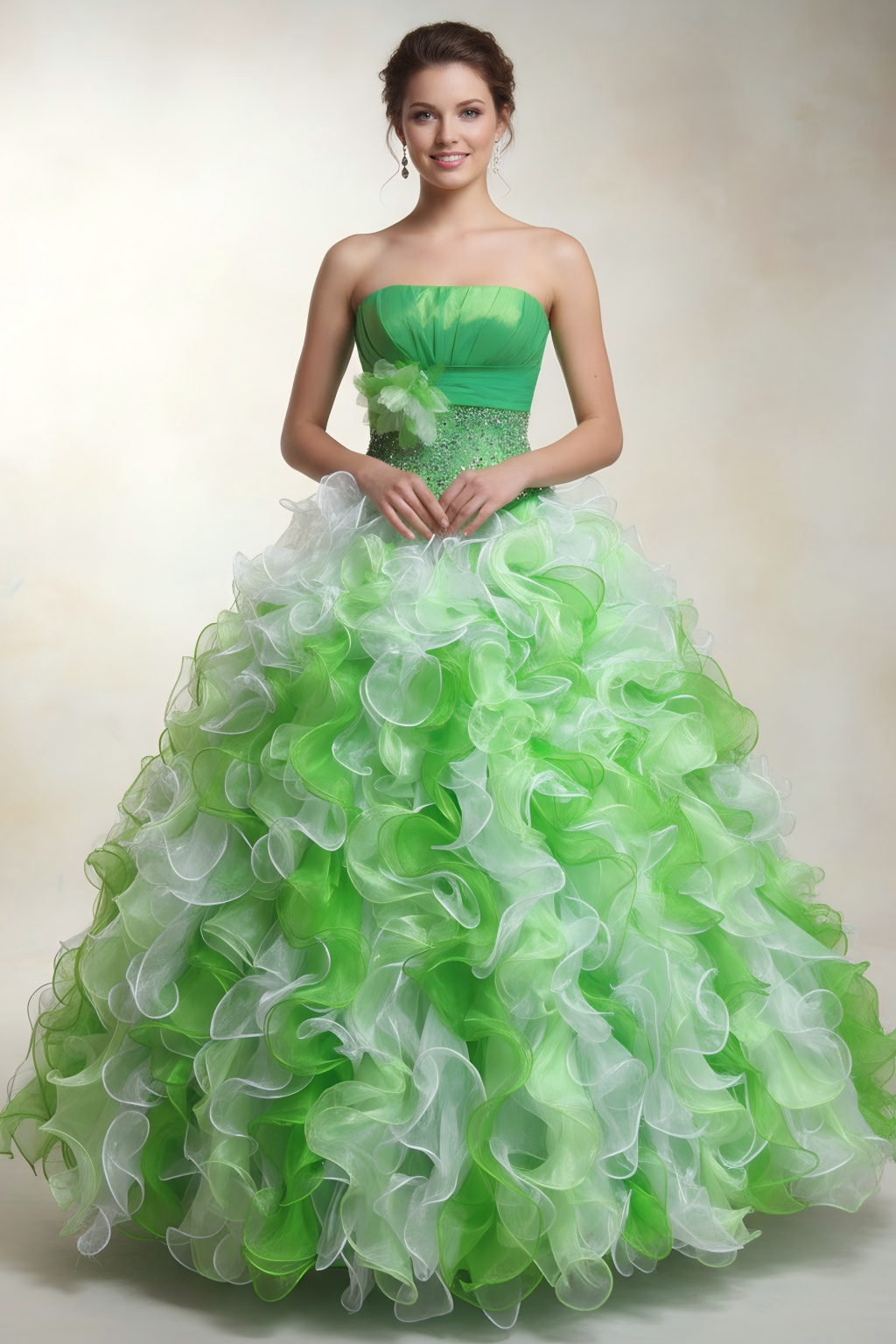
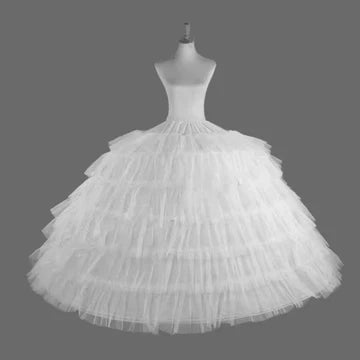
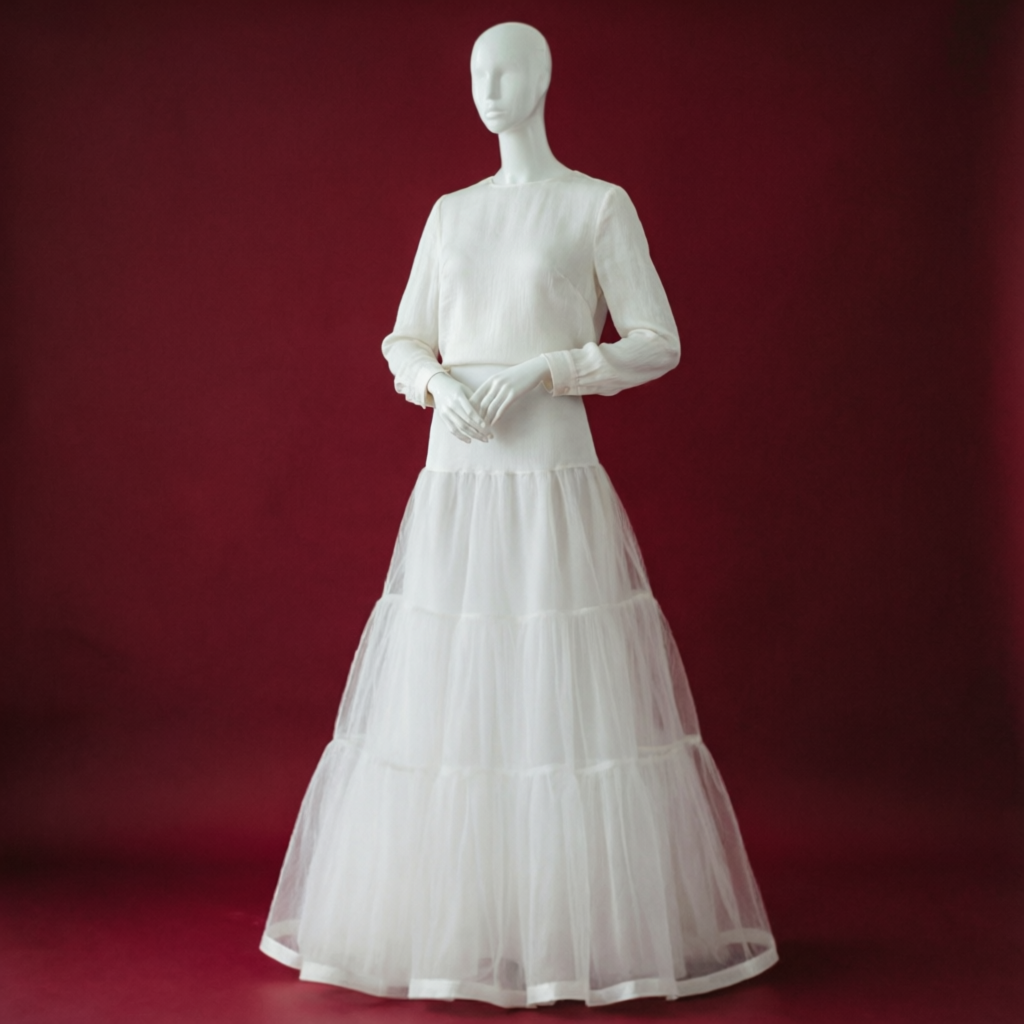
Hoop skirt vs. crinoline comes down to how the volume is created. A hoop skirt uses rigid boning or wire rings to hold out a dramatic shape, think of it like an umbrella frame under fabric. A soft crinoline uses layered netting instead, relying on stacked fabric rather than a rigid structure to create fullness.
A bridal slip is the lightest option of the three, with minimal volume, closer to a fitted underskirt than a structural piece, and it works best under sheath or minimalist gowns that don't need extra shape at all.
|
Structure Type |
Best For |
Comfort Notes |
|
Hoop Skirt |
Full ballgown silhouettes |
More dramatic shape, less flexibility; rigid bands can dig in if unpadded |
|
Soft Crinoline |
Moderate volume, A-line or mermaid |
Lighter than a hoop, breathes better, easier to sit and dance in |
|
Bridal Slip |
Sheath, column, minimalist styles |
Minimal structure, highest comfort, lowest volume |
If you're marrying in a garden, on a beach, or anywhere you'll be walking on uneven ground, a soft crinoline or slip usually beats a rigid hoop for practical comfort. Save the hoop for grand ballroom silhouettes where the dramatic shape is the whole point.
Ready to explore which structure fits your gown? Browse our full collection of non-irritating bridal petticoats and filter by structure type.
Think of it like choosing shoes for a wedding. A dramatic heel looks stunning in photos, but if you're on grass or standing for hours, a lower, sturdier option often serves you better without sacrificing much visually. Structure choice under your dress works the same way; pick for the day you're actually going to have, not just the photo you're picturing.
Step 6: Confirm the Right Size and Fit
An ill-fitting petticoat is uncomfortable, no matter how good the fabric is. Sizing isn't just about how it looks under the dress; it's a comfort factor in its own right.
A crinoline size guide matches length and volume to your height, your dress silhouette, and your venue. Too short, and it peeks out beneath the hem. Too long, and you're tripping on it by the ceremony's second hymn. Too tight at the waist, and you've recreated the exact irritation problem this whole guide is trying to solve.
A quick way to think about it: a petticoat that's too tight causes friction irritation, while one that's too bulky causes heat and chafing irritation. Different mechanisms, same miserable result.
Always measure against your actual wedding dress, not your everyday dress size. A size 8 in one bridal brand can fit completely differently from a size 8 in another, and the petticoat needs to match the dress it's going under, not a generic size chart.
Step 7: Wear-Test It Before the Wedding Day
Always wear-test your petticoat for at least an hour before the actual wedding. Comfort should be verified, never assumed.
Put it on with your dress, or on its own if the dress isn't ready yet, and go about normal movement for sixty minutes. Sit down. Walk around the house. Climb a flight of stairs. Try a few dance-like movements if you can.
Pay close attention to two spots: where the waistband sits and where the hem brushes your legs. Those are the two most common irritation points, and they're also the two areas a five-minute fitting-room try-on almost never reveals.
This step catches what fabric specs can't predict. Everybody is shaped differently, and a petticoat that feels perfect on a mannequin or a stranger's five-star review can still rub the wrong way on you specifically.
How OneWedDress Builds Comfort Into Every Petticoat
We started paying closer attention to this after hearing the same complaint over and over from real brides: the dress was beautiful, but the petticoat underneath was the part they wanted to rip off by the end of the night.
That feedback is exactly why OneWedDress works as a bridal non-irritating floor crinoline manufacturer, not just a retailer reselling whatever's cheapest to stock. We source underskirt fabric specifically for softness, not just volume, including soft-spun tulle and cotton-blend linings for pieces marketed as hypoallergenic. Every production batch goes through a basic tension check on the elastic before it's approved, because a waistband that feels fine at rest can still be too tight under movement.
We also manufacture all three structure types covered above, hoop, soft crinoline, and slip, including full floor-length crinoline options built for dramatic ballgown silhouettes, so you're matching the piece to your actual dress and comfort needs instead of settling for whatever's in stock.
If you're not sure which one fits your gown, our size guide walks through it by silhouette, and our care guide covers how to keep the fabric soft after each wash. Our return policy also covers fit and comfort issues, because we'd rather you tell us before the wedding than after.
The Bottom Line
Petticoat irritation isn't something you have to accept as part of getting married. Check the fabric, test for breathability, inspect the waistband, pick the right structure, confirm your size, and wear-test before the big day, and you've eliminated nearly every common cause of discomfort before it starts.
Ready to find one that actually feels as good as it looks? Shop our non-irritating petticoats and filter by structure type to match your gown. Sourcing for your boutique or planning a bulk order? Reach out to our manufacturing team; we're happy to send fabric swatches before you commit to anything.
Frequently Asked Questions
What fabric is least likely to irritate skin on a wedding petticoat?
Soft-spun tulle and cotton-blend linings are generally the gentlest options. Look for low-denier fiber and a finished, non-fraying hem. The rougher the netting feels to your fingers, the rougher it will feel against skin after several hours.
Is a hoop skirt more comfortable than a crinoline?
Not necessarily, it depends on your dress and tolerance for rigid structure. Hoop skirts create dramatic volume using rigid bands, while soft crinolines use layered fabric instead, which usually breathes better and moves more naturally.
How do I know what size crinoline to buy?
Measure against your actual wedding dress, not your everyday size, and match length and volume to your height and silhouette using a crinoline size guide. A too-tight waistband or overly bulky volume both cause irritation, just in different ways.
Can a petticoat cause a skin reaction during long wear?
Yes, especially with synthetic fibers, unfinished edges, or tight elastic against sensitive skin. Choosing a hypoallergenic lining and breathable fabric significantly lowers that risk over an eight-hour wedding day.
How long can you comfortably wear a petticoat on your wedding day?
A well-made petticoat with breathable fabric and a covered elastic waistband should be comfortable for a full 8 to 10-hour day. Wear-testing it beforehand for at least an hour is the best way to confirm that for your specific body and dress.